Are butcher block countertops a good idea?
Short answer: Butcher block countertops are a good idea if you want warmth, a surface you can sand and refinish, and a material many homeowners can install themselves, but they need regular oiling or a sealed finish and careful drying around the sink. They suit farmhouse, Scandinavian and cottage kitchens and work especially well on an island, while busy family kitchens often keep stone around the sink and wood elsewhere.
What to know
Water is the main risk
Standing water around an undermount sink or dishwasher can darken and lift the wood. A sealed finish (varnish or a hardwax oil) and wiping up puddles prevents most damage.
Scratches are fixable
Unlike stone or quartz, a scratched or stained butcher block can be sanded and re-oiled. That makes it forgiving over the long run.
Oiled or sealed changes how you use it
An oiled top can be cut on, but needs oiling every few weeks at first. A sealed top needs less care, but you should use cutting boards on it.
Heat needs trivets
Hot pans can scorch wood, so plan a trivet spot or a stone section near the range.
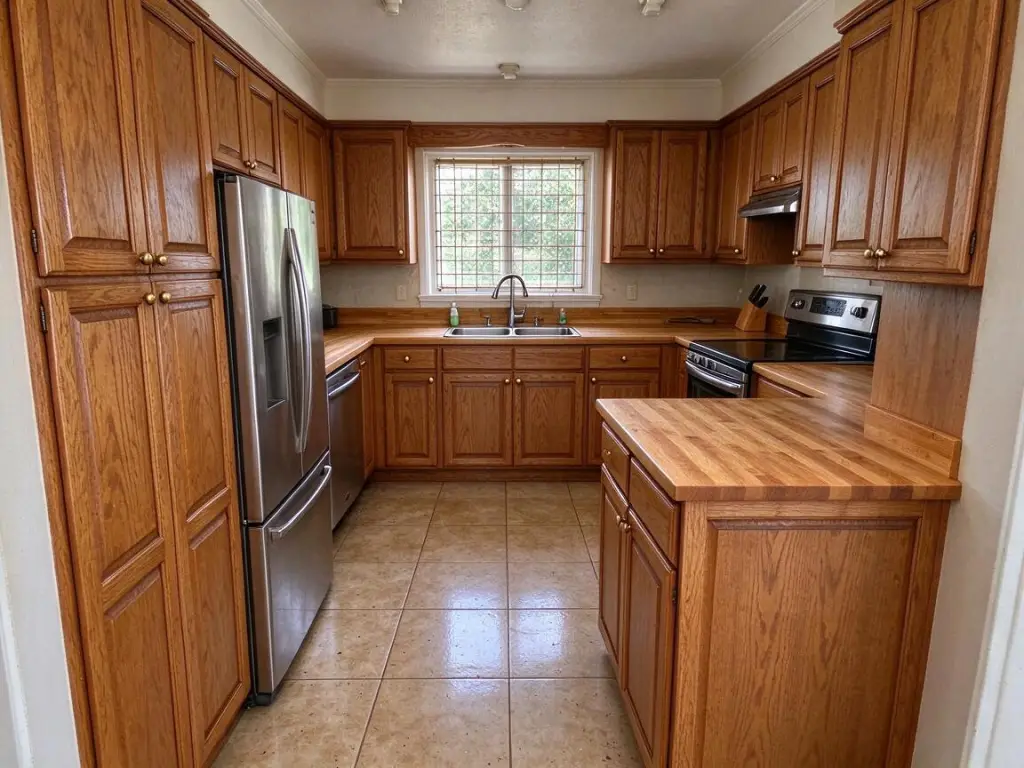
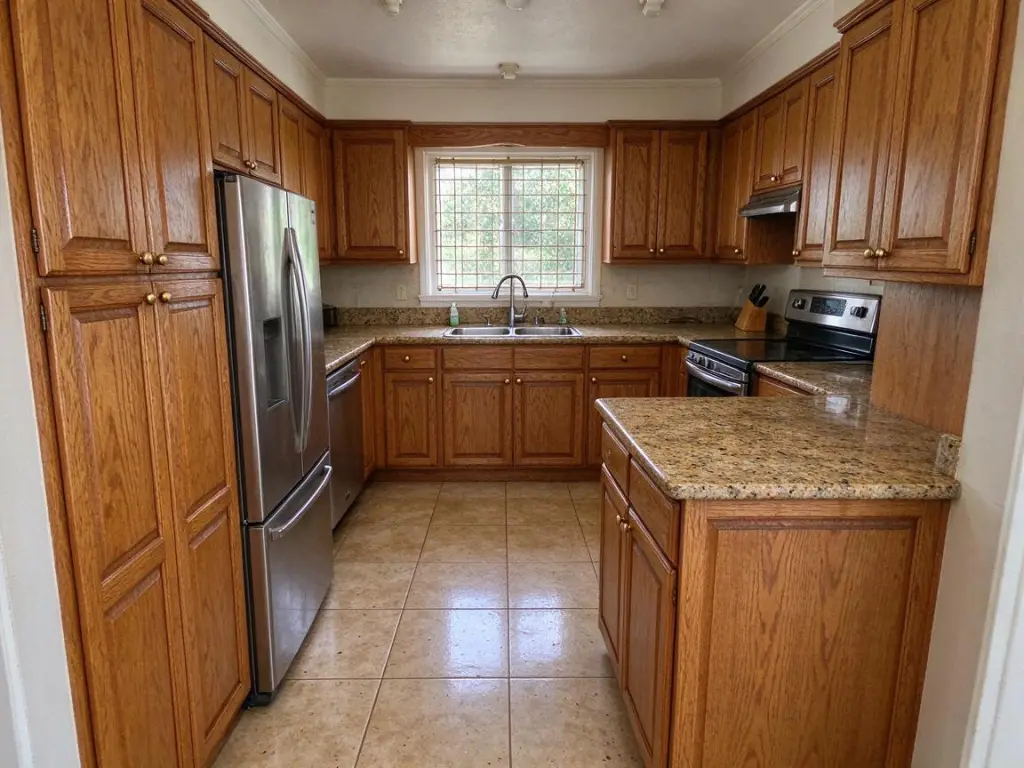 BeforeAfter
Where butcher block looks best
Butcher block looks best against painted cabinets: white, cream, sage, navy and black all pair well with oak, maple or walnut tops. Against stained wood cabinets, choose a clearly different wood tone so they do not look mismatched.
Wood species changes the look a lot. Maple is pale and even, oak has visible grain and a warm tone, and walnut is dark and dramatic. Edge-grain construction (long strips) looks cleaner; end-grain (checkerboard blocks) is better for chopping but less common for whole counters.
A popular mix is stone or quartz around the sink and range, with a butcher block island. You get warmth where people sit and a low-care surface where water and heat are.
How to see it on your own kitchen
- Take a straight photo of your kitchen in daylight from the doorway or a corner, then upload it below (iPhone photos work as they are).
- The tool opens on "Change one thing" with countertop selected. Pick a preset or type the exact countertop you have in mind.
- Sign in with Google: the first 3 images are free, no credit card. Plans start at $14 a month for 25 images.
- In about 30 seconds you get the same kitchen with only the countertop changed. Drag the slider to compare before and after, then download the one you like or keep editing one detail at a time.