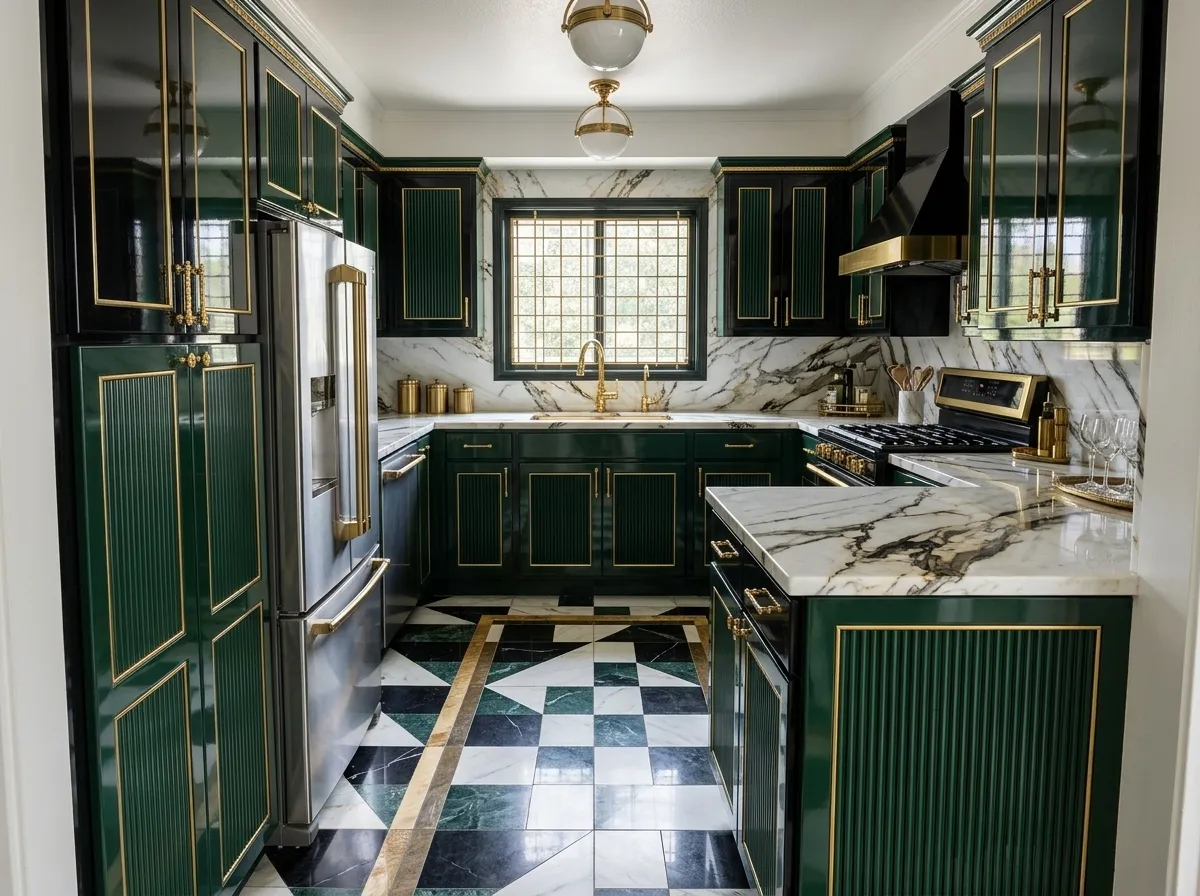
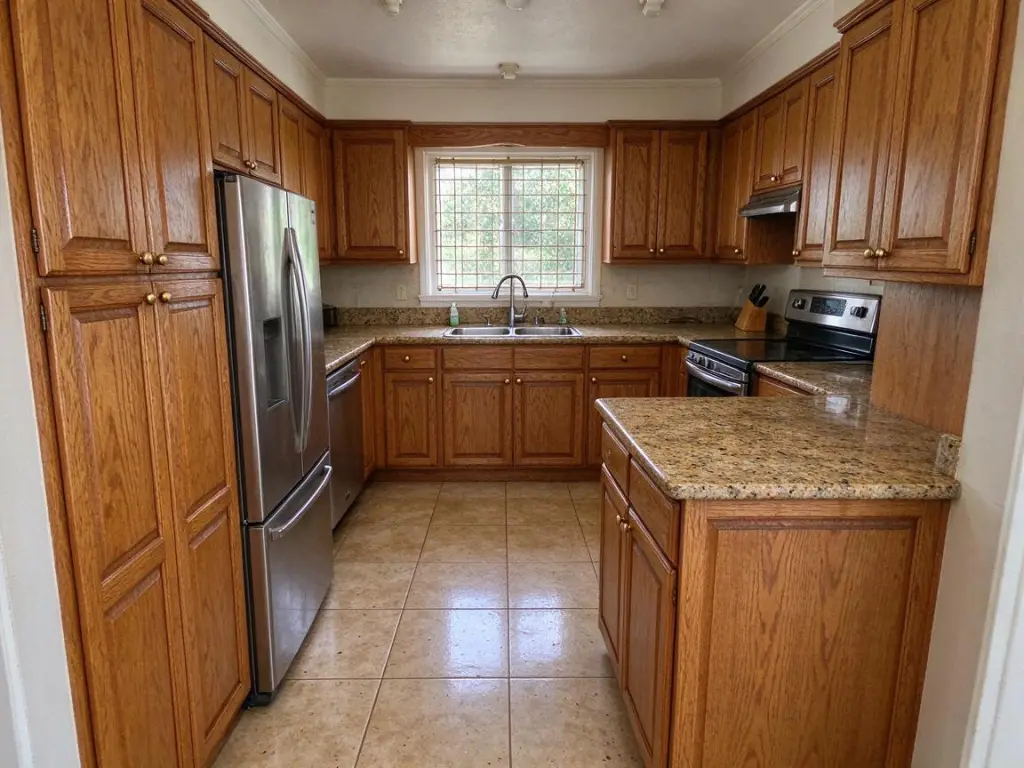
An art deco kitchen uses deep green, navy or black lacquer cabinets, fluted or reeded details, marble with bold veining, brass trim and hardware, geometric tile and globe lights. To see your own kitchen in this style, upload a photo to AI Kitchen Redesign and choose Art Deco; sign in with Google and your first 3 images are free.
What defines the style
- Cabinets
- Deep green, navy or black lacquer, often with fluted or reeded panels.
- Countertops
- Marble with bold veining, in white with gray or gold, or black with white.
- Backsplash
- Geometric tile: fan, chevron, hexagon or arch patterns.
- Floor
- Checkerboard, herringbone or geometric marble tile.
- Colors
- Emerald, navy, black, cream and brass.
- Lighting
- Globe, tiered or fan-shaped pendants and brass sconces.
More kitchens in this style
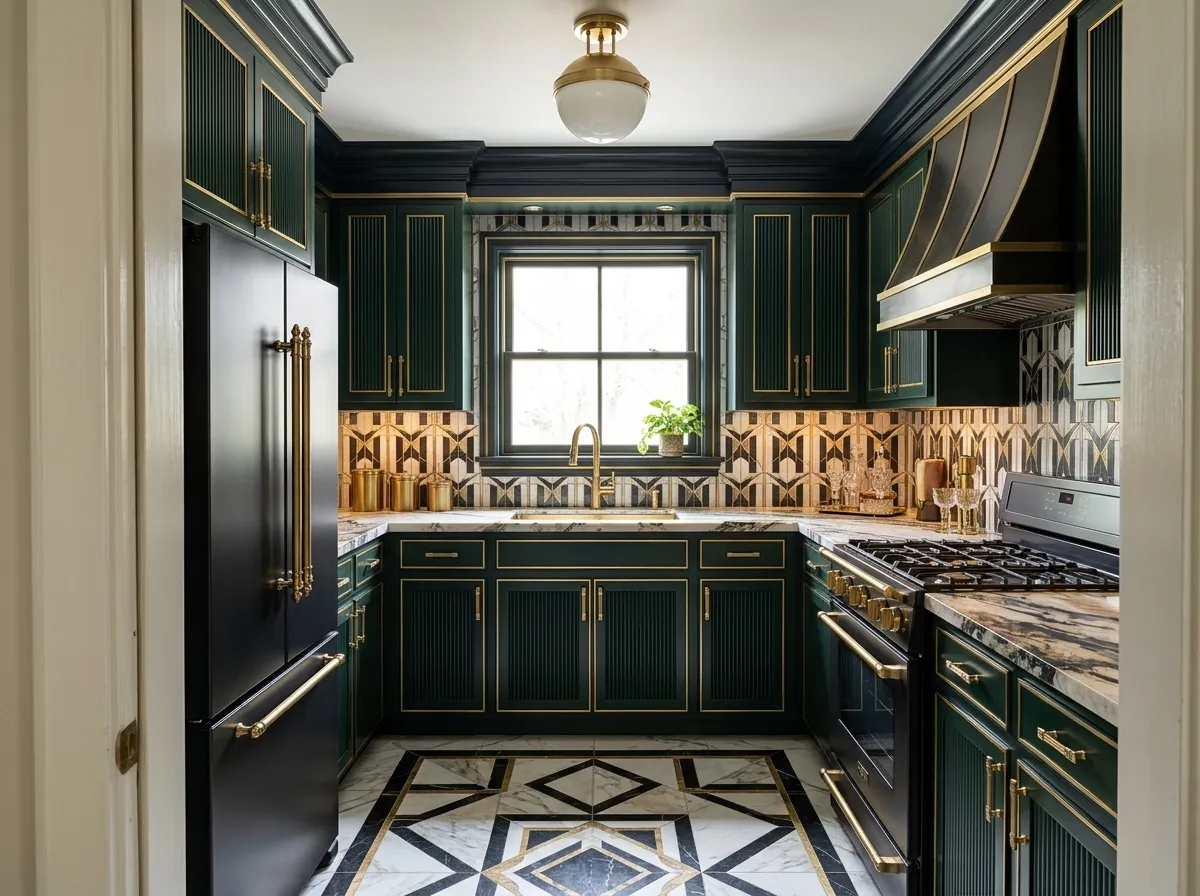
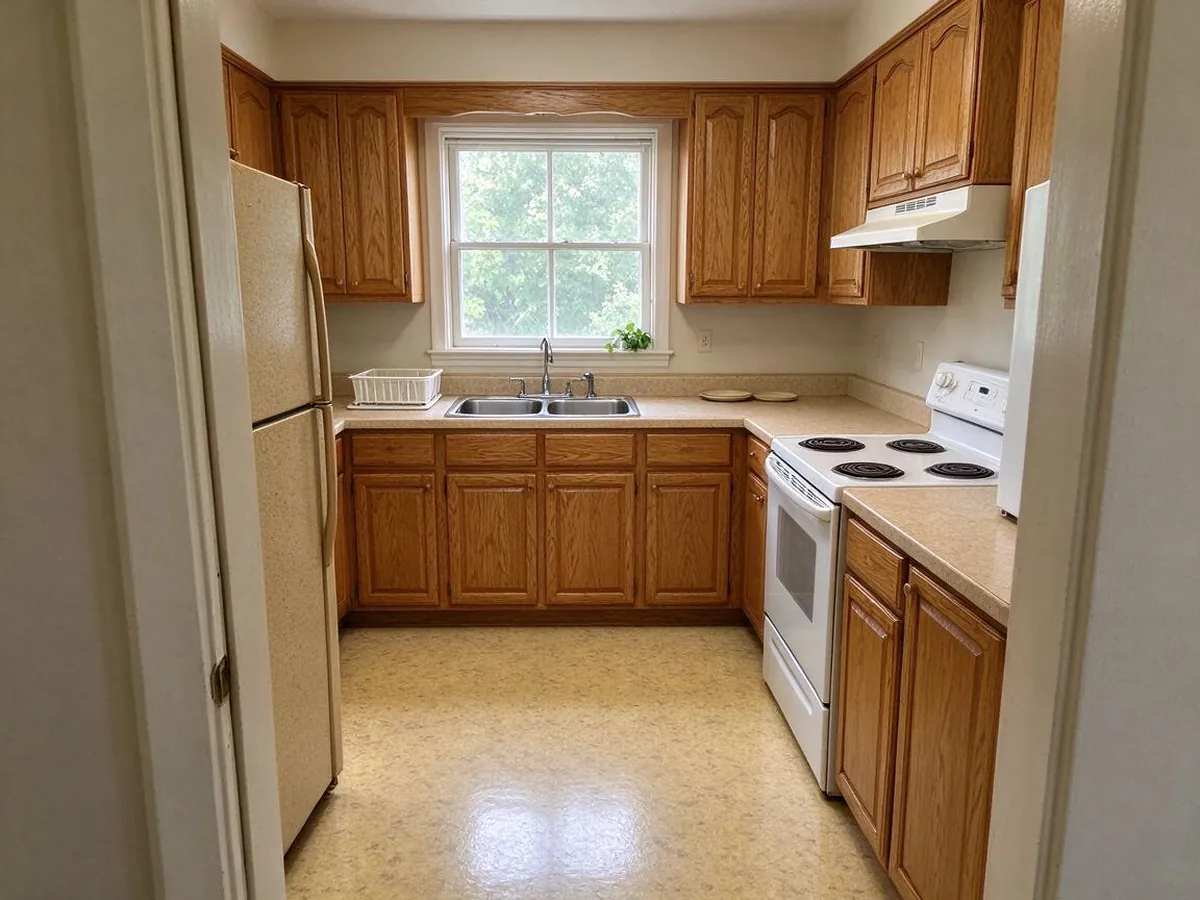 BeforeAfter
Get the look without a full remodel
- Paint cabinets deep green or navy and add brass hardware.
- Use a fan or chevron tile on the backsplash.
- Hang globe or tiered brass pendants over the island.
Art deco kitchen color palettes
Art deco colors are rich and saturated, balanced by cream or white and tied together with brass.
Emerald and brass: deep green lacquer cabinets, a white marble counter with bold veining and brass hardware. The best-known version.
Navy and gold: navy cabinets, a white or cream marble, gold hardware and a black and white checkerboard floor.
Black and cream: black lacquer lower cabinets, cream uppers, a white marble counter and brass. Formal and graphic.
Blush and green: blush pink walls or uppers, deep green lower cabinets and brass. Softer and more playful.
Symmetry helps any palette. Matching cabinets, lights and tile on each side of the range or window give the ordered look of the period.
Deep colors look best in a gloss or satin finish, which reflects light and shows the depth of the color. A flat matte dark green can look heavy rather than rich.
The ceiling can be part of the palette. A ceiling painted a soft gold, blush or the cabinet color makes the room feel finished and frames a statement light.
Art deco kitchen materials and pairings
A typical pairing: lacquer or high-gloss painted cabinets, fluted or reeded panels on the island, boldly veined marble counters, geometric tile, brass trim and hardware, and globe or tiered lights.
Curves and geometry carry the style: arched shelves, rounded island ends, fan or chevron tile and stepped shapes in lights or mirrors.
Brass is the main metal. Use it on the hardware, faucet, light fittings and thin trim lines on cabinets or shelves.
Combinations to avoid: rustic wood, matte farmhouse black, butcher block and plain white subway tile. Gold on every surface tips the room toward theatrical.
Art deco vs mid-century modern: if you prefer walnut and simple shapes, mid-century is the better fit; if you want lacquer, brass and marble, art deco is.
Glass adds to the look: reeded or fluted glass on upper doors, mirrored panels on a backsplash or a glass pendant with brass details.
Strongly veined marble carries the drama, so keep the tile and floor to two or three colors that pick up the veining.
Which kitchens suit an art deco style?
Apartments in older city buildings, homes from the 1920s and 1930s and kitchens open to a formal dining area suit art deco best.
In a small kitchen, keep the deep color on the lower cabinets, use cream or glass-front uppers and add geometric pattern only on the backsplash or floor.
In a modern apartment, an art deco kitchen works if the layout stays simple and the color, brass and lights add the period feel.
Dark lacquer needs good light. In a dim kitchen, use navy or green only on the island and choose a white marble counter.
Renters can add brass canisters, a fluted glass pendant if allowed, a geometric rug and brass or glass accessories.
The style suits people who enjoy hosting and want the kitchen to feel like part of the dining room in the evening.
In a narrow galley kitchen, a checkerboard floor laid on the diagonal and one dark run of cabinets can make the room feel wider and more deliberate.
If you share the kitchen with someone who prefers a calmer look, keep the deco details to the lights, hardware and one tile, and use cream or white for the cabinets.
Art deco kitchen on a budget vs a full remodel
At the Light refresh level, paint the cabinets emerald, navy or black, change the hardware to brass and add globe or tiered pendants.
Fluted panels can be added to an existing island or the end of a cabinet run without replacing the cabinets.
The Remodel level adds marble counters with bold veining, a geometric tile backsplash, a checkerboard or herringbone floor and lacquer or high-gloss doors.
Full redesign suits you if you want rounded island ends, arched shelving or a symmetrical layout around the range. Compare it with the Remodel level on the same photo.
Upload a photo of a tile or marble you like as a material reference, or use change one thing mode to try only an emerald cabinet color.
Brass trim is cheap to add: thin brass strips along shelf edges or the toe kick give an art deco line without new cabinets.
Lighting changes the room quickly. Brass globe pendants and a pair of matching sconces at the range or sink add the period feel before any other work.