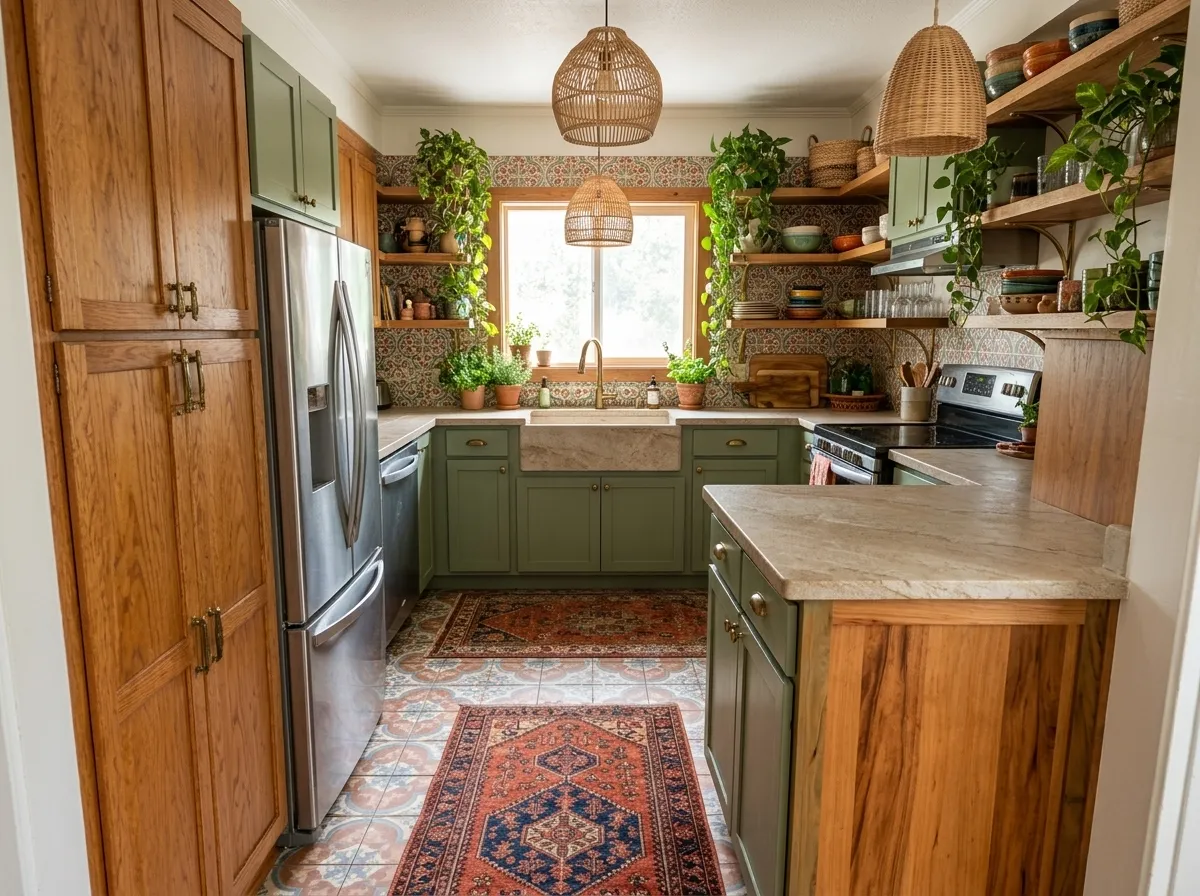
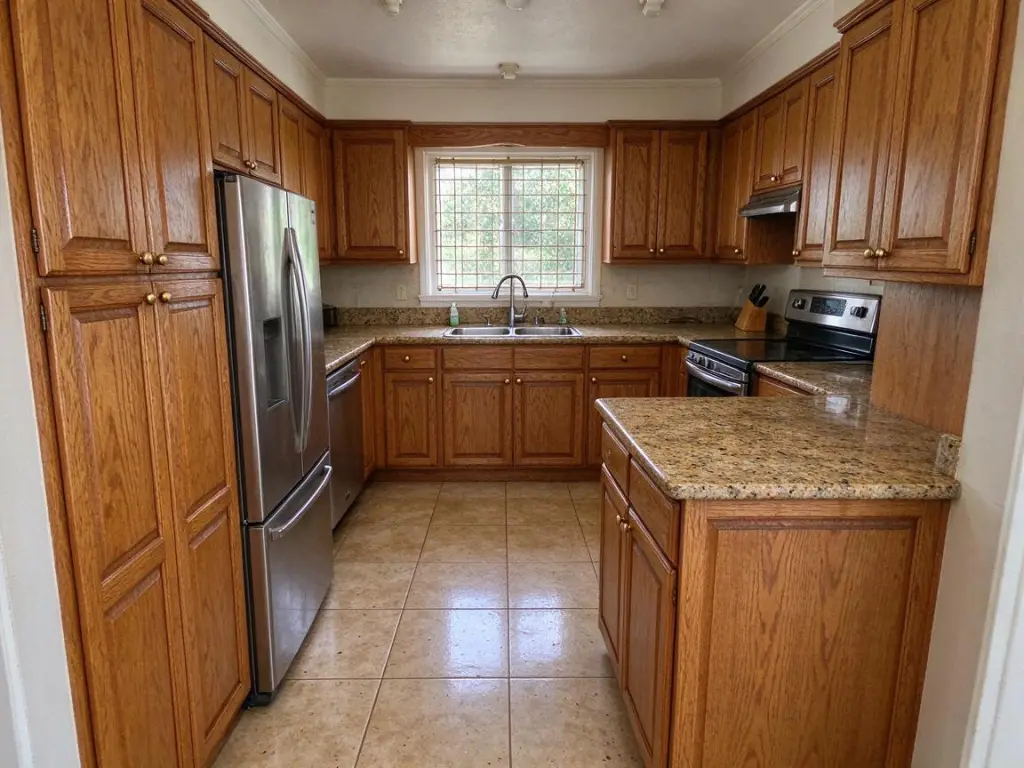
A bohemian kitchen uses warm wood and painted cabinets, a patterned cement tile backsplash or floor, open shelves with plants and handmade ceramics, rattan pendants and layered rugs in a relaxed, colorful palette. To see it on your own kitchen, upload a photo to AI Kitchen Redesign and choose Bohemian; sign in with Google and your first 3 images are free.
What defines the style
- Cabinets
- Warm wood, or painted terracotta, green, mustard or blue, often mixed.
- Countertops
- Butcher block, terrazzo or warm stone.
- Backsplash
- Patterned cement tile, zellige or colored handmade tile.
- Floor
- Wood or patterned tile, with layered rugs.
- Colors
- Terracotta, mustard, deep green, blue and warm wood.
- Lighting
- Rattan, wicker or paper pendants and warm light.
More kitchens in this style
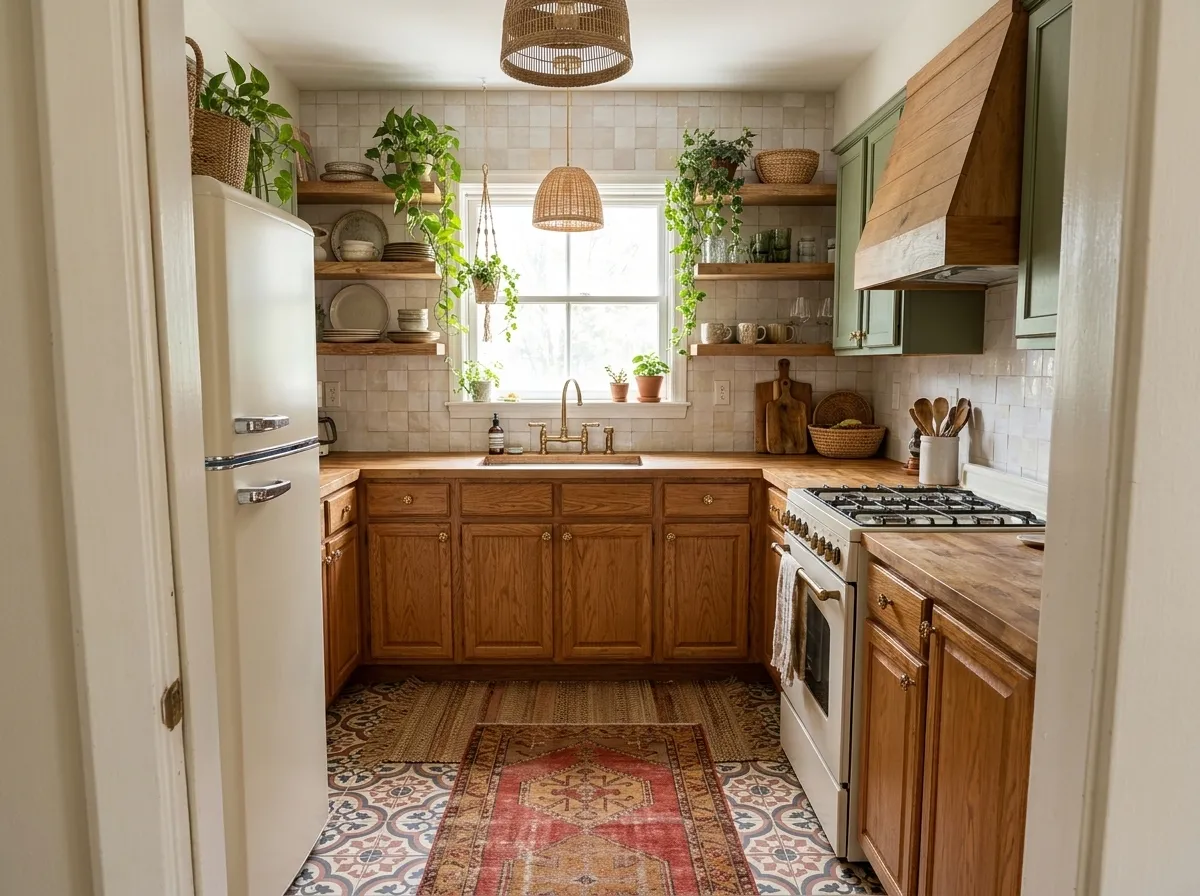
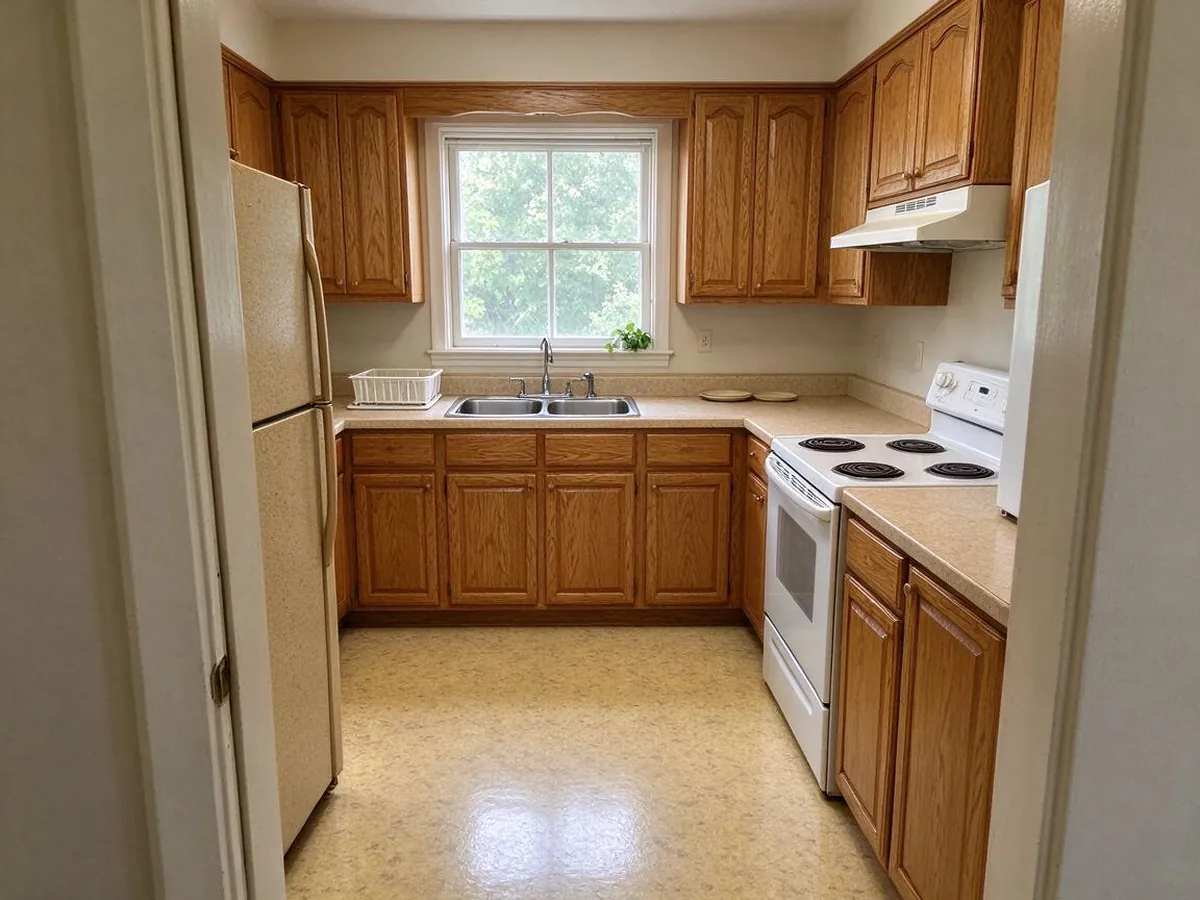 BeforeAfter
Get the look without a full remodel
- Replace one or two upper cabinets with open shelves for plants and ceramics.
- Add a rattan or woven pendant over the sink or table.
- Lay a vintage-style runner in front of the counter.
Boho kitchen color palettes
Bohemian palettes are warm and earthy, with color layered over a base of wood and cream.
Terracotta and wood: natural wood cabinets, terracotta tile or paint, cream walls and rattan. The most relaxed version.
Deep green and brass: deep green cabinets, a patterned cement tile backsplash, brass hardware and plenty of plants.
Blue and mustard: blue painted lower cabinets, mustard in the textiles or tile, and a butcher block counter.
Cream and pattern: cream cabinets, a bold patterned tile floor and colorful textiles. Easier in a small room.
Pick three or four colors and repeat them in tile, textiles and ceramics. Repeating colors makes a mix of objects look intentional.
Wood tone is the base of the palette. Warm mid-tone woods such as teak, acacia or oiled oak suit boho better than gray-washed or very pale wood.
Walls work best in a warm white, cream or a soft clay color. Bright white makes the colors and wood look harsher; a darker wall suits only a room with plenty of light.
Boho kitchen materials: what to mix and what to avoid
A typical pairing: wood or painted cabinets, butcher block or terrazzo counters, a patterned cement or zellige backsplash, open wood shelves, rattan or wicker pendants and a vintage-style rug.
Handmade and natural materials carry the style: clay, jute, linen, rattan, unglazed ceramics and wood with visible grain.
Plants are part of the design. Trailing plants on high shelves and herbs on the window sill soften hard surfaces.
Boho vs eclectic: both mix things freely, but boho stays with natural materials and warm, earthy colors, while eclectic can combine any period and color.
Combinations to avoid: high-gloss slab doors, chrome, cool gray stone and matching sets. Two strong patterns side by side, such as a patterned floor and a patterned backsplash in different colors, can clash.
Mismatched pieces are part of the look, but they need something in common. Keep the wood tones close, or repeat one material, such as rattan, in two or three places.
Hardware can be brass, leather loops or wooden knobs. Mixing two of these is fine; avoid chrome and very sleek modern pulls.
Which kitchens suit a bohemian style?
Rental apartments, small kitchens and older homes with character suit boho well, because much of the style comes from objects rather than construction.
Kitchens with good daylight suit it best, since plants are a large part of the look.
In a small kitchen, keep the cabinets light and let one patterned surface and a few plants carry the style.
The style suits people who collect ceramics, textiles and plants and like having them on show.
Renters can do most of it: a rug runner, open shelves where allowed, plants, rattan shades on existing lights, ceramics and peel-and-stick patterned tile.
In a large kitchen, boho needs anchors so it does not feel scattered: a big patterned rug, one long open shelf or a group of pendants over the island.
Open shelves near the cooktop collect grease and dust, so keep plants and display pieces away from the range and use the shelves there for things you use every day.
Bohemian kitchen on a budget vs a full remodel
At the Light refresh level, paint the cabinets an earthy color, change the hardware to brass or leather pulls and replace the ceiling light with a rattan or woven pendant. Then add plants and textiles.
The Remodel level adds a patterned cement or zellige backsplash, a butcher block or terrazzo counter, a patterned tile floor and new wood doors.
Full redesign suits you if you want to replace the upper cabinets on a whole wall with open shelves, or add a built-in bench. Compare it with the Remodel level on the same photo.
Upload a photo of a tile pattern as a material reference, or use change one thing mode to try only the backsplash or only a cabinet color.
Changing only the backsplash to a patterned tile often gives the biggest change for the least work, because it sits at eye level behind everything else.
Textiles do a lot for little money: a vintage-style runner, a patterned curtain under the sink and linen tea towels in your palette colors.
Because so much of the style is in objects, try the Light refresh level first and only move to Remodel if the cabinets or tile still feel wrong.