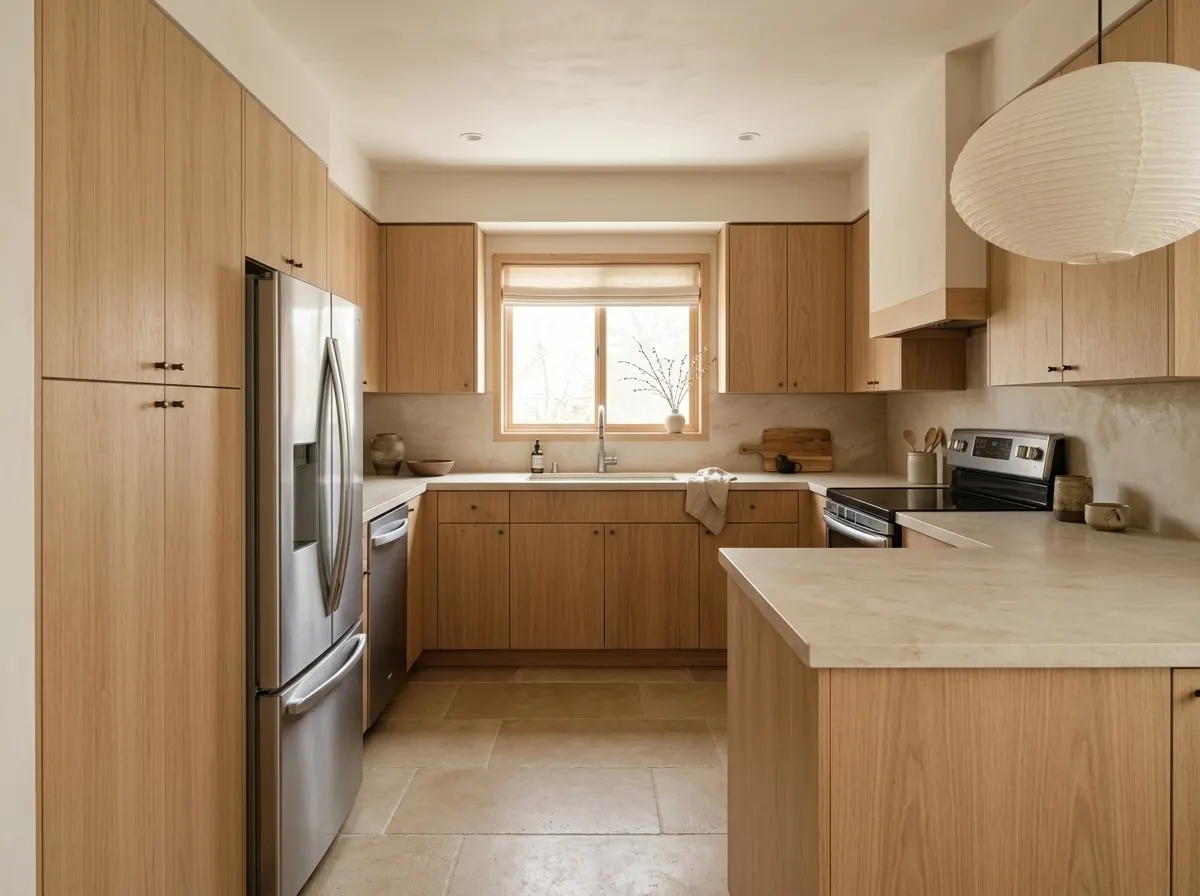
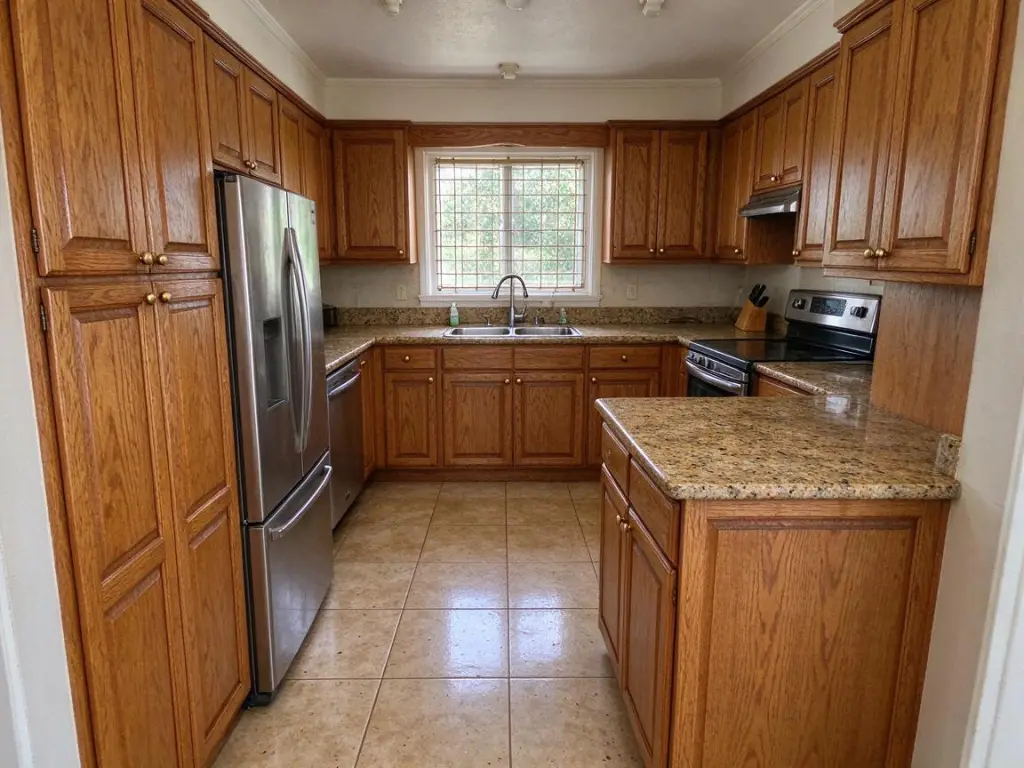
A Japandi kitchen combines warm natural wood (oak or walnut) cabinets with muted earthy colors like beige, clay, sage and charcoal, matte stone or plaster surfaces, and very little decoration. You can preview a Japandi version of your own kitchen by uploading a photo to AI Kitchen Redesign and picking Japandi.
What defines the style
- Cabinets
- Flat or slatted doors in natural oak, walnut or a matte earthy paint.
- Countertops
- Matte stone, honed quartz or concrete in warm gray or beige.
- Backsplash
- Limewash, plaster or handmade-looking tile in a soft neutral.
- Floor
- Mid-tone wood or large matte tile.
- Colors
- Beige, clay, sage, charcoal and natural wood.
- Lighting
- Paper or rattan pendants and warm, low light.
More kitchens in this style
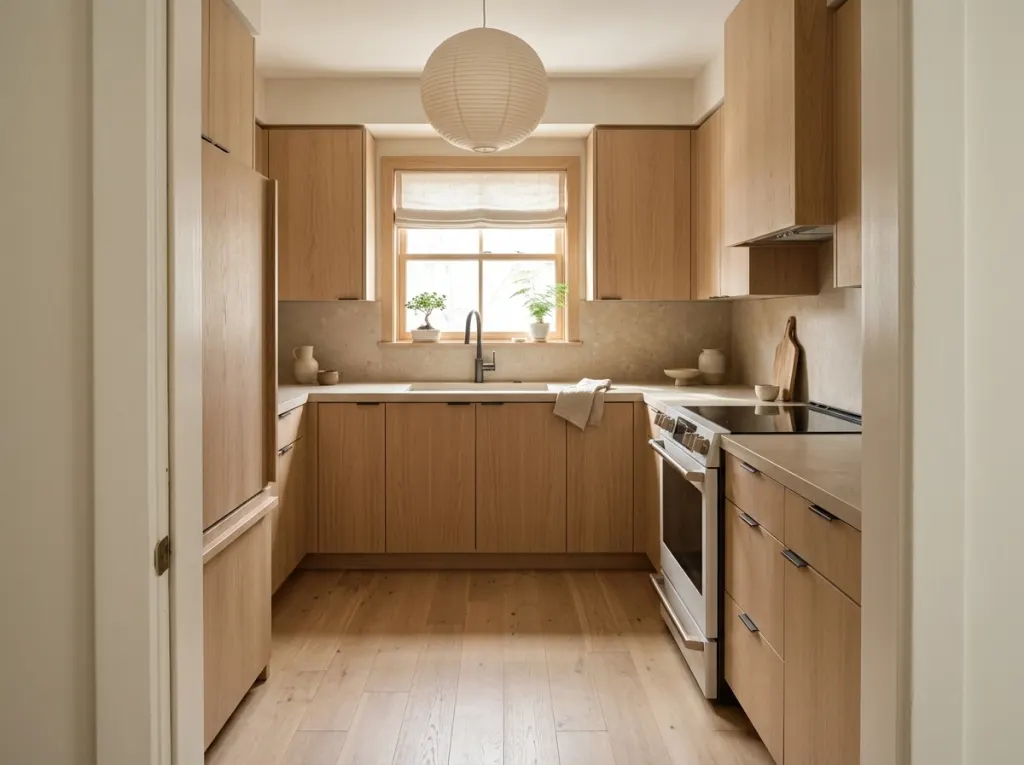
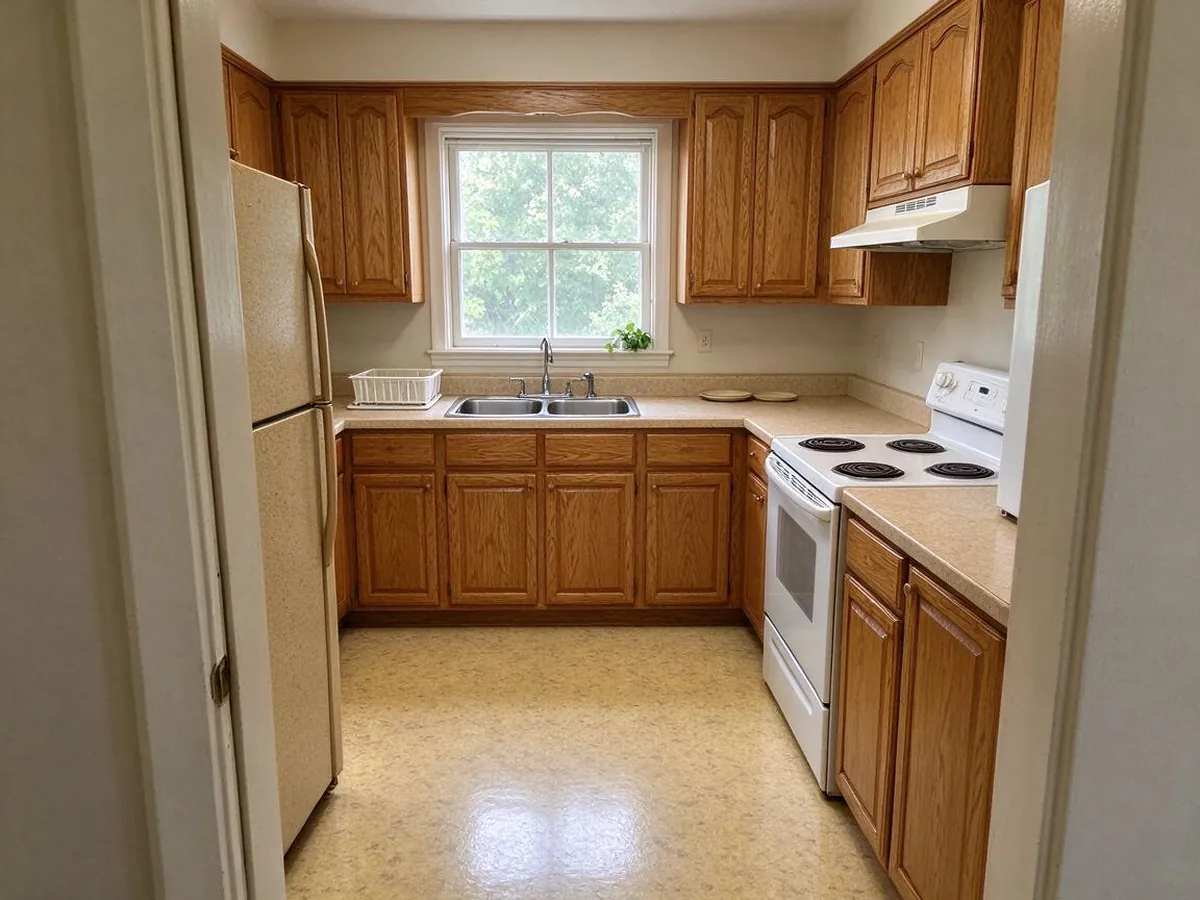 BeforeAfter
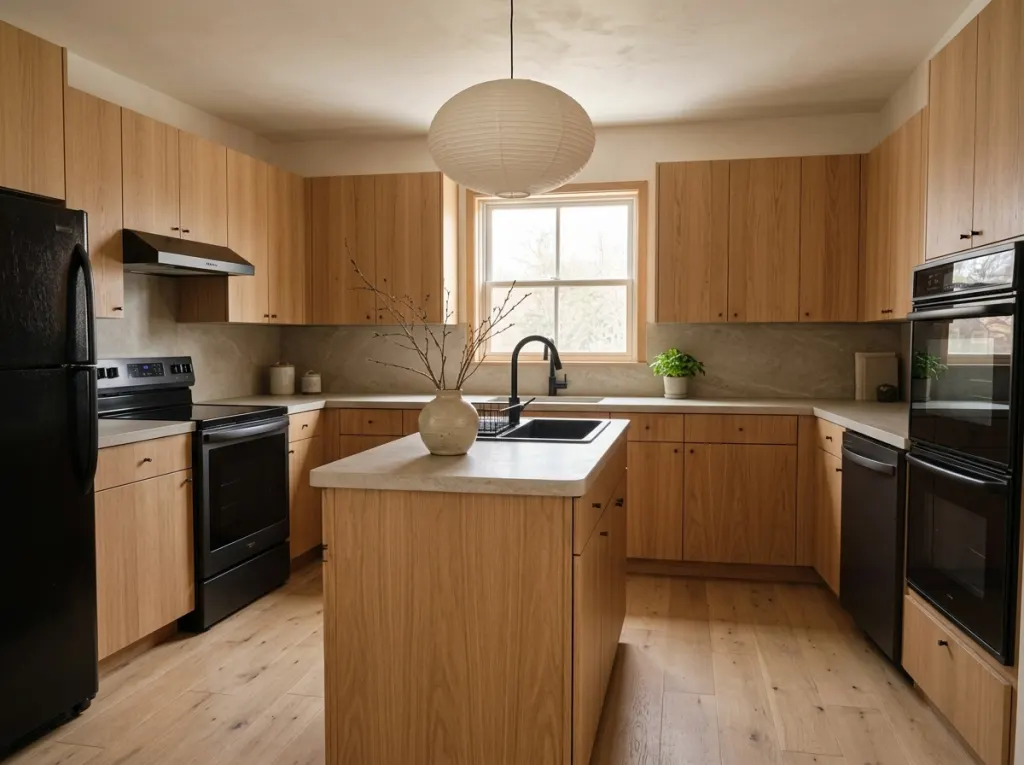
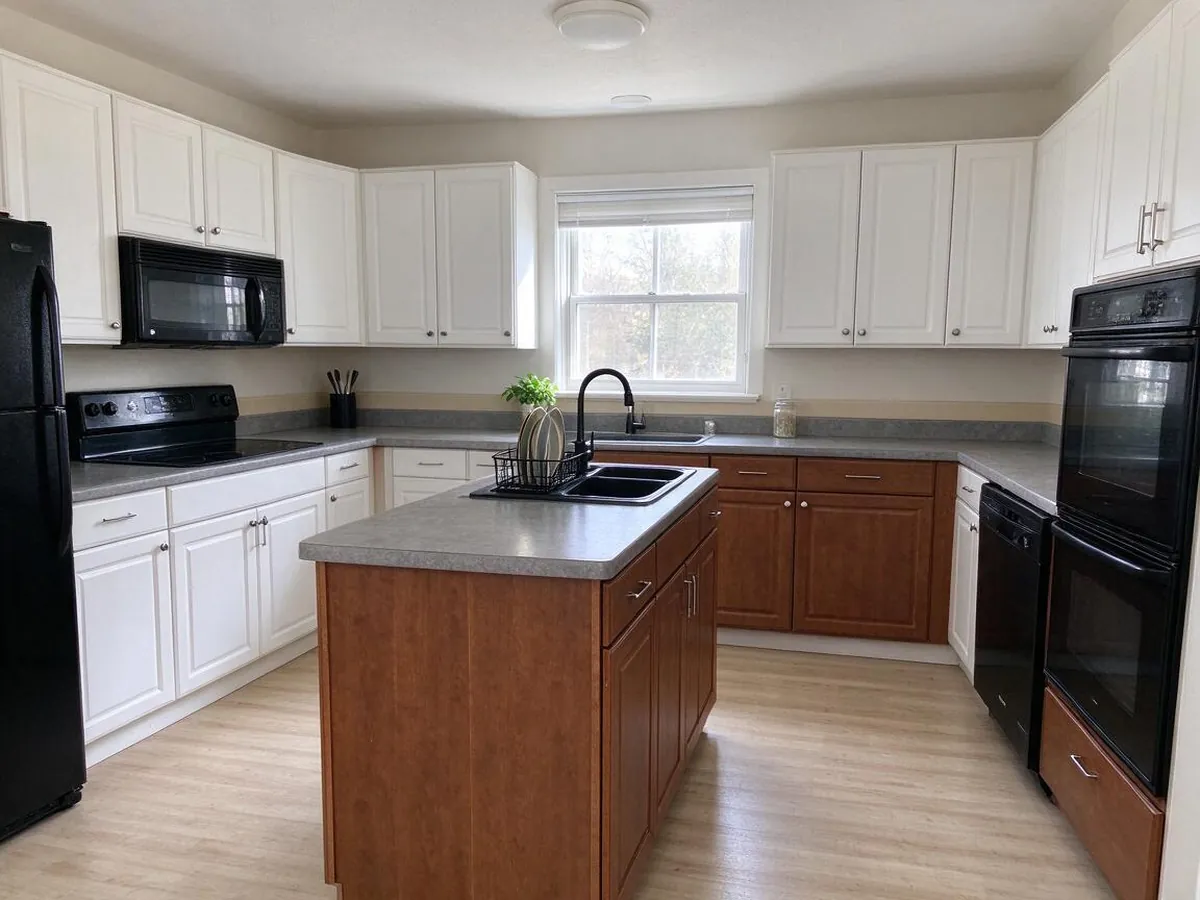 BeforeAfter
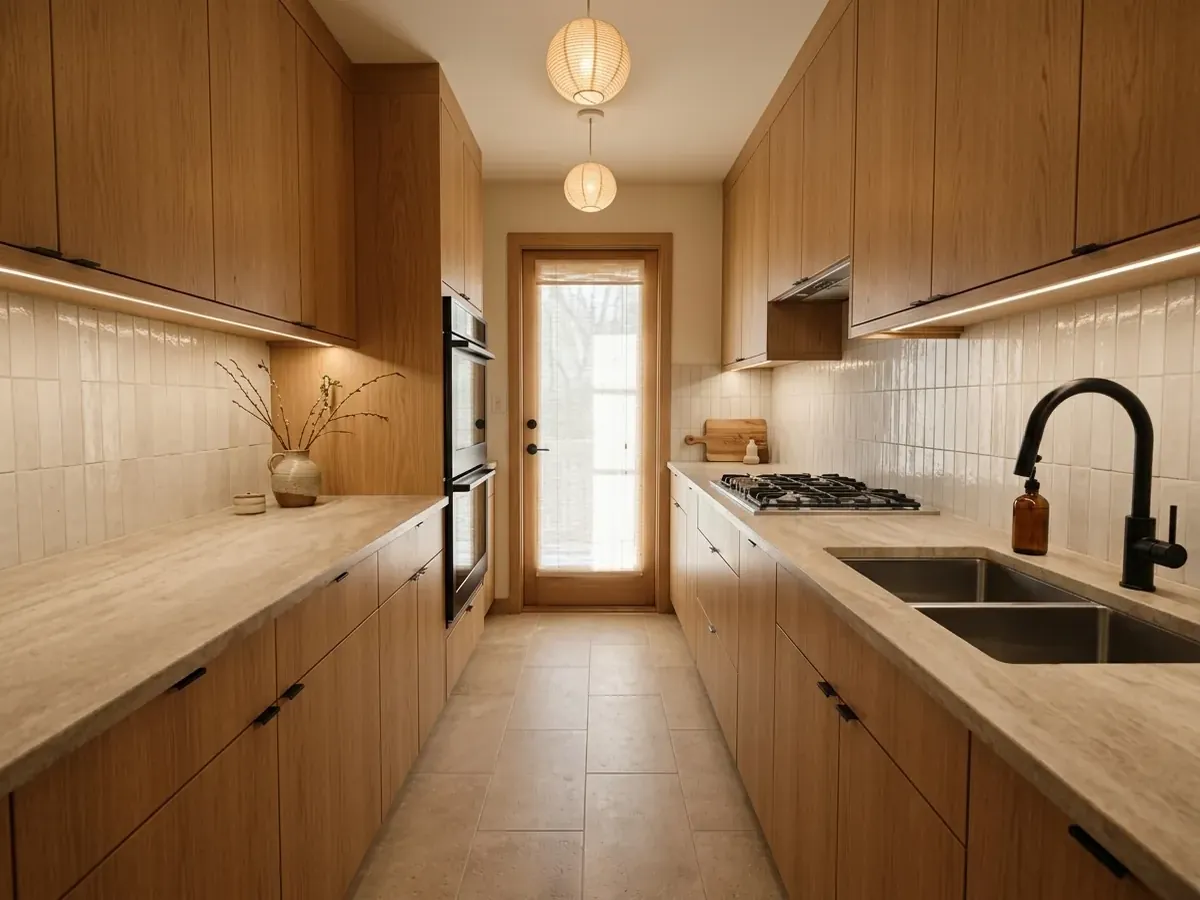
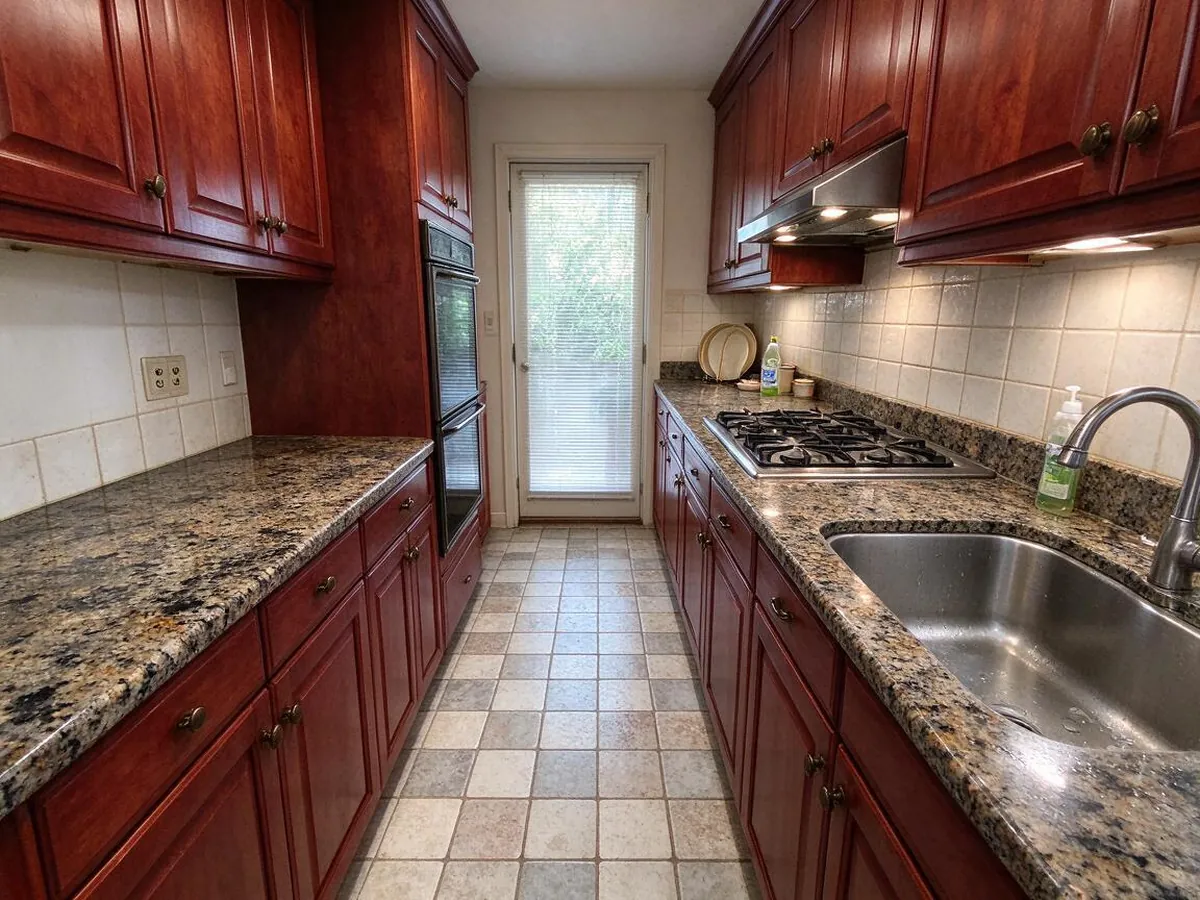 BeforeAfter
Get the look without a full remodel
- Choose one warm wood tone and repeat it on doors, shelves and stools.
- Hide small appliances; keep one ceramic or wood object on the counter.
- Use warm white bulbs (2700K) instead of cool white.
Japandi kitchen color palettes
Japandi mixes Japanese restraint with Scandinavian warmth, so its colors are earthy and muted. Most palettes are built from one wood, one off-white and one darker note.
Oak and warm white: light oak slab cabinets, warm white walls, a pale stone or white quartz counter and a matte black tap. This is the lightest Japandi version and suits small rooms.
Japandi colors come from nature: wood, stone, clay, paper and linen. When you pick a paint, hold it next to the wood you plan to use. A white that looks clean on its own can look stark beside oak, while a white with a little beige in it will sit comfortably.
Greige and walnut: greige or mushroom-colored lower cabinets, walnut open shelves or a walnut island, an off-white counter and a pale wood floor. It feels calm and a little deeper.
Charcoal and ash: charcoal or dark gray cabinets with ash or light oak trim, a pale counter and a light floor. Use this in rooms with good daylight so the dark cabinets do not feel heavy.
Sand and clay: sandy beige cabinets, a handmade clay-tone tile backsplash, a limestone-look counter and oak details. This is the warmest palette and works well with plenty of plants.
Whichever palette you choose, keep the number of colors low: two or three, plus the natural shade of the wood. Japandi rooms look calm because nothing competes, so contrast should be gentle, not sharp. If you use black, keep it to thin lines such as the tap, a pendant cord or narrow pulls.
Plants are part of the palette too. A single olive tree, a trailing pothos on a shelf or a branch in a ceramic vase adds green without breaking the muted scheme.
Which materials go into a Japandi kitchen?
Japandi depends on natural materials with visible texture but little shine. A typical pairing is flat oak veneer cabinets with vertical grain, a matte off-white quartz or honed limestone-look counter, a handmade-look zellige or matte ceramic backsplash in a warm white, and a light oak or pale stone floor.
For a darker version, use charcoal or black-stained oak cabinets, a pale honed counter, a plain lime-plaster or microcement wall in place of tile, and a light wood floor so the room keeps a balance.
Slatted wood panels on an island or a tall unit add the Japanese side of the style. Paper or linen pendant shades add the soft light that the look depends on.
Avoid high-gloss doors, polished marble with strong veining, chrome fittings and bright colored tile. Mixing many wood tones also works against the calm look; keep to one main wood and at most one darker accent wood.
Pay attention to grain direction. Vertical grain across a run of oak doors looks calmer and more Japanese; horizontal grain feels more Scandinavian. Either works, but keep one direction throughout the kitchen.
Matte black or brushed stainless taps suit the style better than chrome, and a single bowl undermount sink in a matte finish keeps the counter line clean.
Does a Japandi kitchen suit your home?
Japandi suits small and medium kitchens well because it relies on few materials and closed storage. A small kitchen in oak with a pale counter and hidden handles feels larger and quieter.
It works in apartments, modern homes and simple older houses. In a heavily decorated period house, keep the doors very plain and let the wood and texture do the work, so the kitchen feels deliberate rather than out of place.
Japandi needs good storage, because the look falls apart when counters are crowded. If your kitchen has little cabinet space, plan a tall pantry unit or deeper drawers before you think about finishes.
For renters, the quickest steps are a paper or linen pendant shade, wooden utensils and boards, a few ceramic pieces in earthy colors, a linen blind and clearing the counters of everything but daily essentials.
Light matters more than room size. Japandi uses warm, low, diffused light, so a kitchen with only one bright ceiling fitting will feel flat. Plan under-cabinet light for work, a soft pendant over the table or island, and warm white bulbs everywhere.
Japandi on a budget vs a full remodel
A light refresh in Japandi means painting cabinets in greige, mushroom or warm white, adding wooden or black pulls, changing to a paper or linen pendant and removing clutter. This is the Light refresh level in the tool: paint, hardware and lights.
Take away before you add. Japandi is as much about what is not in the room as what is, so start by removing decorations, extra appliances and anything you have not used in months. Then decide which few objects, such as a wooden board, a stoneware jar or a plant, stay out on purpose.
The Remodel level changes the cabinet fronts to oak or dark-stained slab doors, adds a matte pale counter, a textured tile or plaster backsplash and a light wood floor. Keeping the cabinet boxes and layout keeps the work simpler.
Choose Full redesign if you want to add a slatted island, rework storage or remove wall cabinets in favor of a single shelf. It changes everything, so compare it with the Remodel level on the same photo.
Since the Japanese side of the style values craft, it is fine to spend more on the pieces you touch every day, such as the tap, the handles and the counter, and less on things you rarely see.
If you have seen a specific oak or tile you like, upload it as a material reference. The tool keeps your walls, windows and camera angle and gives you two Japandi variations in about 30 seconds.