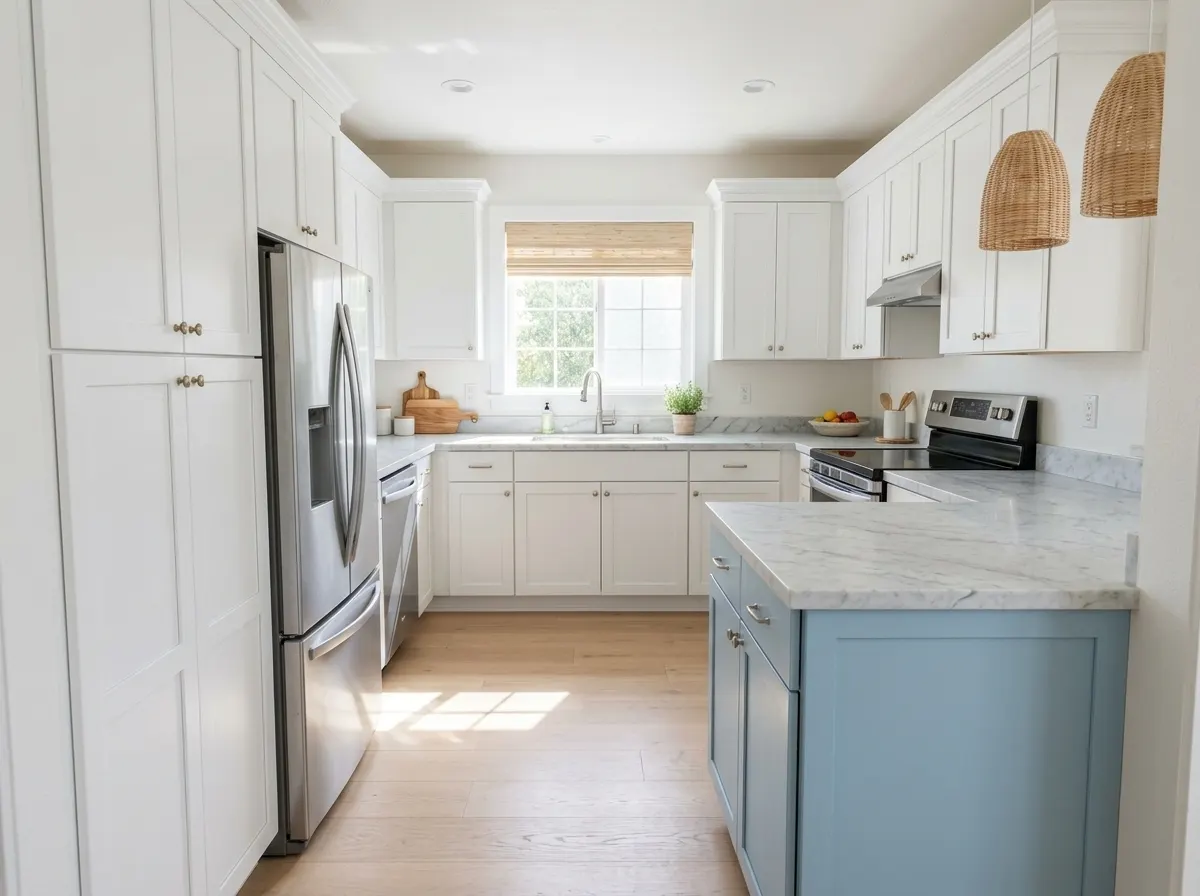
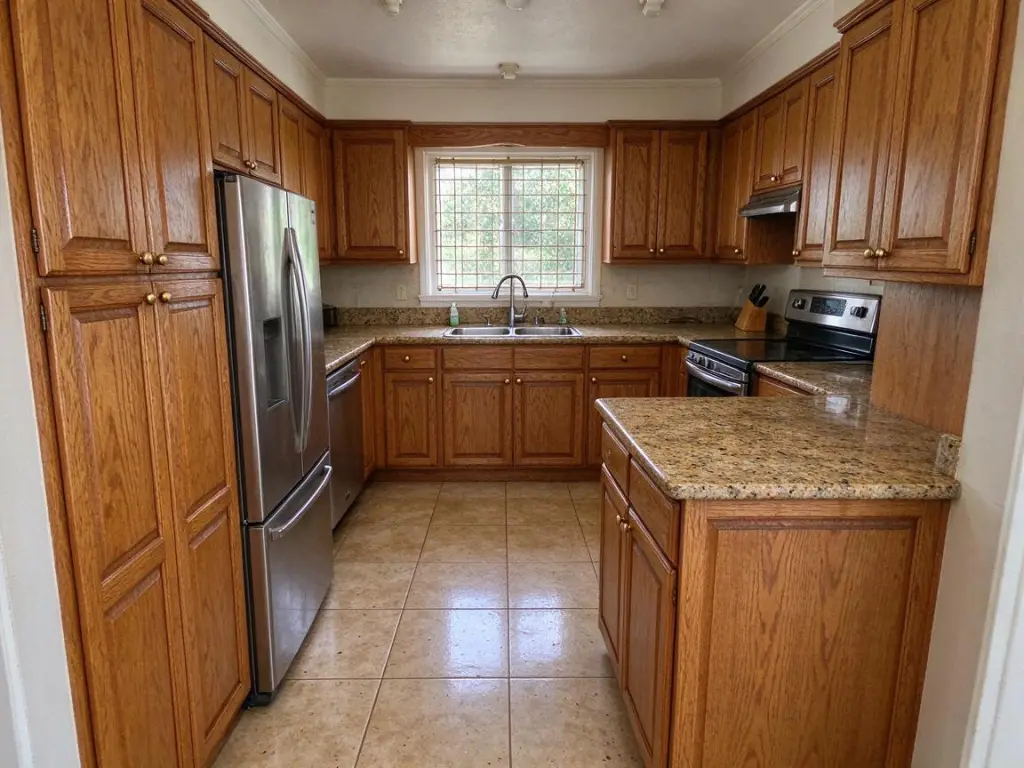
A coastal kitchen uses white or soft blue cabinets, light wood or white counters, glossy white or blue tile, light wood floors, and natural textures like rattan, jute and woven pendants. You can preview a coastal version of your own kitchen by uploading a photo to AI Kitchen Redesign and choosing Coastal.
What defines the style
- Cabinets
- White, sand or soft blue shaker or beadboard doors.
- Countertops
- White quartz, light marble or pale wood.
- Backsplash
- Glossy white or blue tile, sometimes in a fish-scale pattern.
- Floor
- Light or whitewashed wood.
- Colors
- White, sand, sky and sea blue, with natural fibers.
- Lighting
- Rattan or woven pendants, glass lanterns.
More kitchens in this style
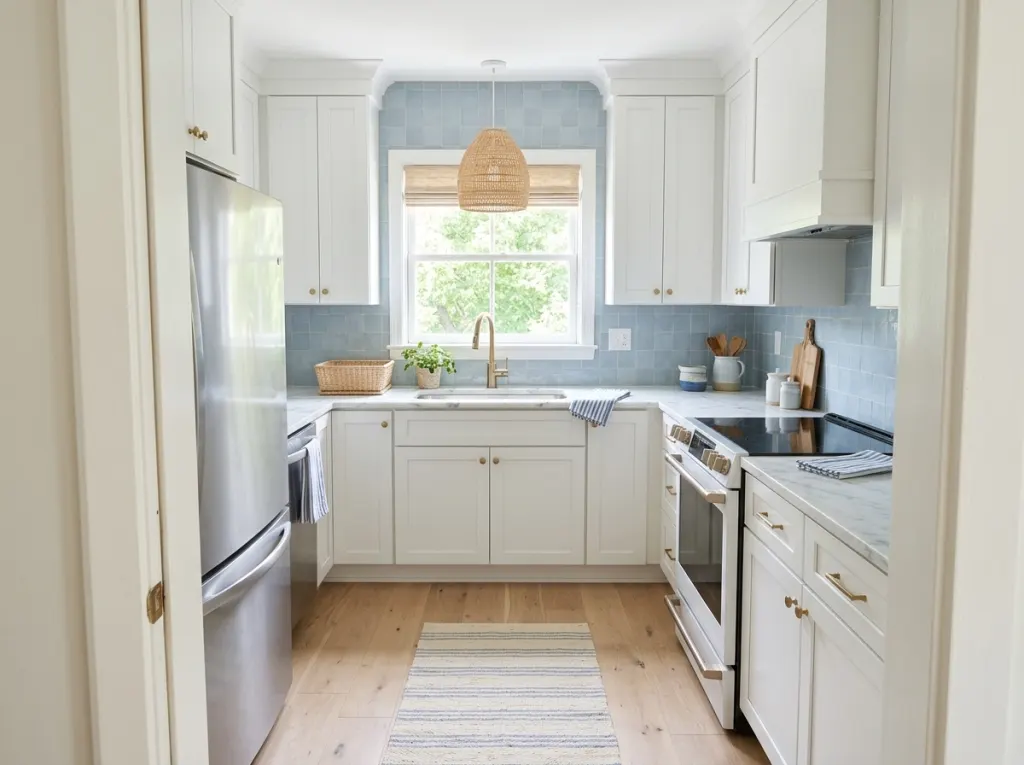
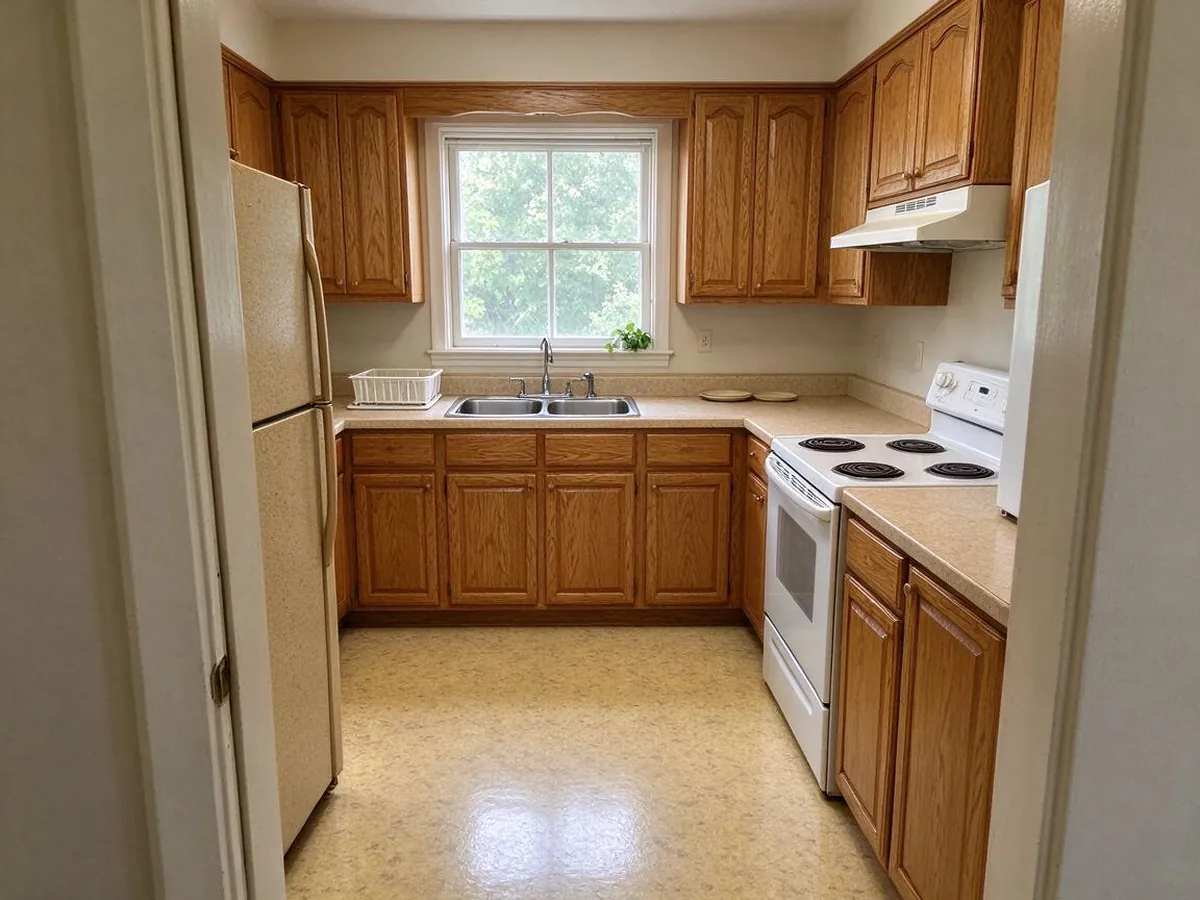 BeforeAfter
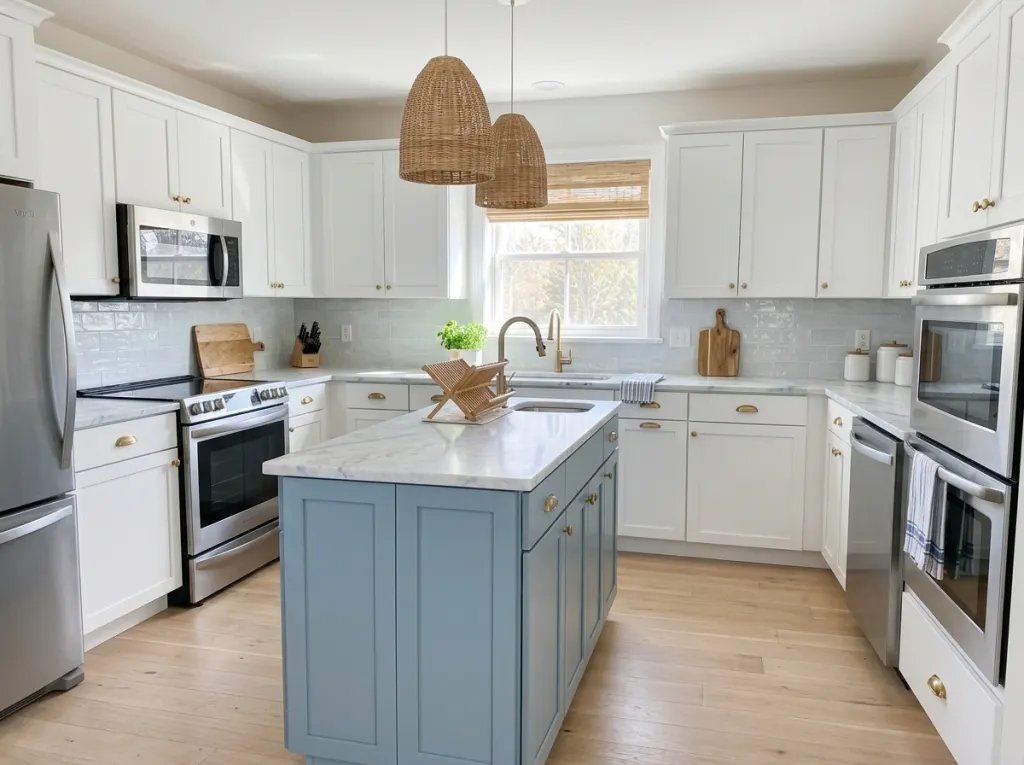
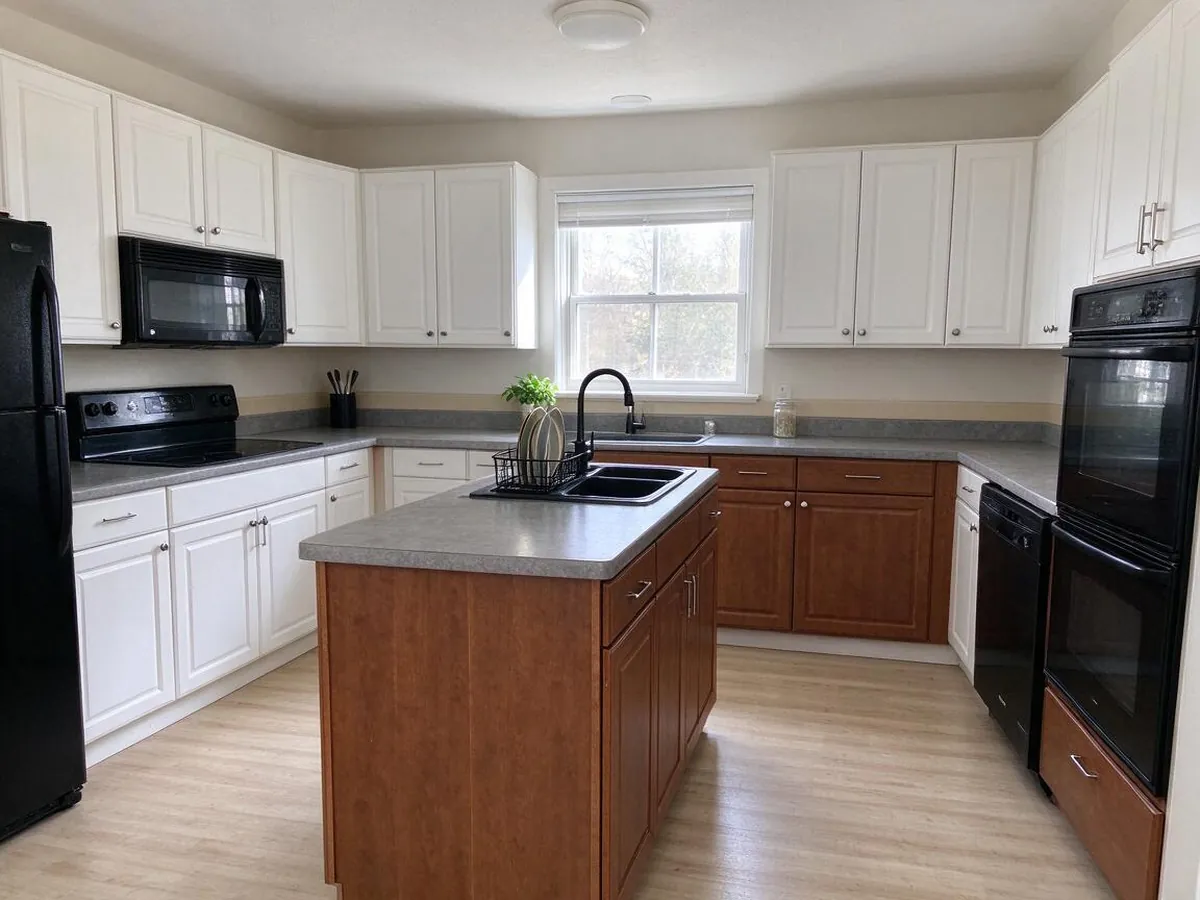 BeforeAfter
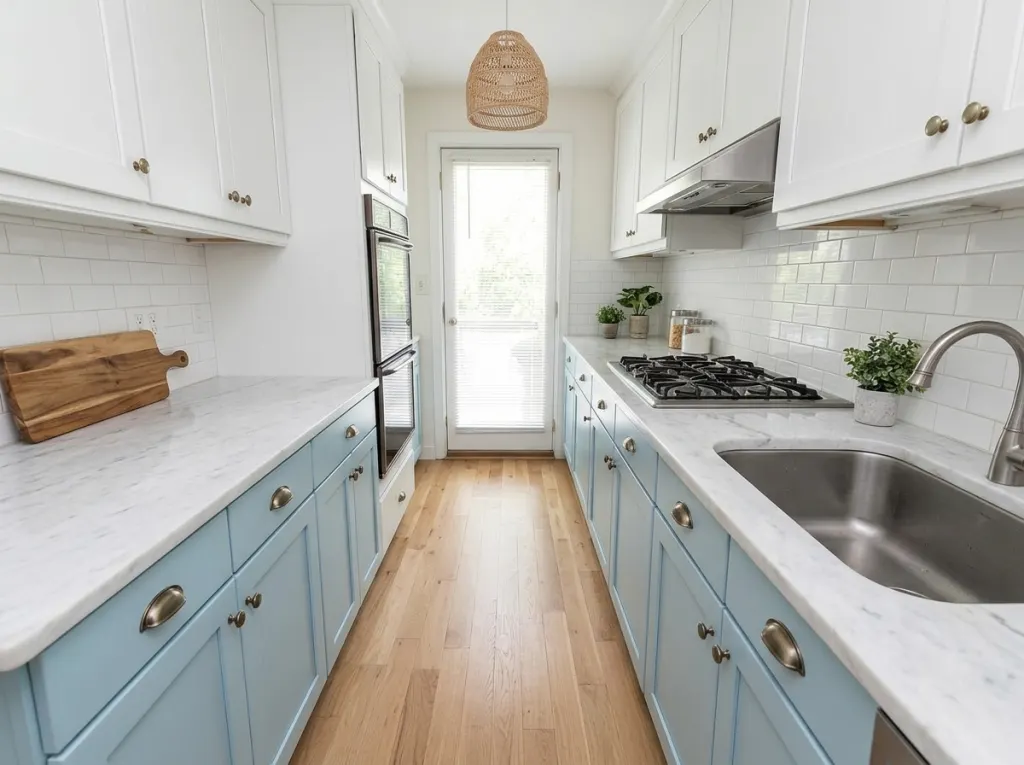
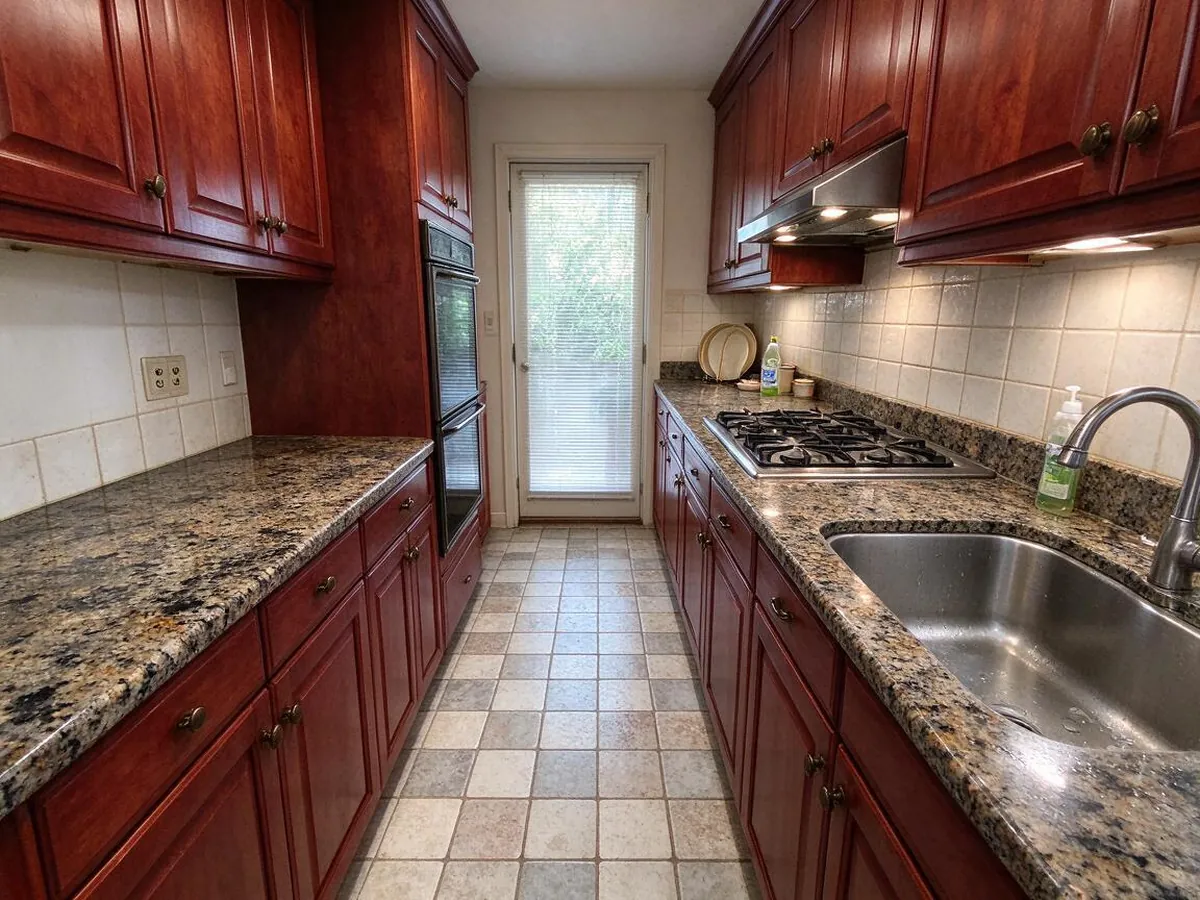 BeforeAfter
Get the look without a full remodel
- Paint the island a soft blue and keep the perimeter white.
- Add rattan bar stools and a woven pendant.
- Use a glossy tile backsplash to bounce light around.
What colors go in a coastal kitchen?
Coastal palettes are light and airy, built from white, sand and soft blues or greens. The colors should look a little washed by sun, never saturated. Pick one blue or green and use it in one or two places, with white and wood doing the rest.
White and pale blue: white shaker cabinets, a pale blue or sky-gray backsplash or wall, a white quartz counter and a light oak floor. Add brushed nickel hardware. This is the simplest coastal palette and suits almost any room.
Sand and white: sandy beige or warm stone-colored lower cabinets, white uppers or open shelves, a white counter and light oak details. It reads as coastal through texture and warmth rather than blue, so it suits people who find blue too cool.
If you are unsure how much blue to use, start with white cabinets and add blue only in the backsplash. Tile is easier to live with than painted cabinets if you later decide the blue is too strong.
Navy and white: a navy island or navy lower cabinets, white perimeter cabinets, a white counter and brass or rope-wrapped details. This is the more nautical version and works best in larger, bright kitchens.
Seafoam and driftwood: soft seafoam or sage-blue lower cabinets, weathered gray-brown wood shelves, a white counter and a whitewashed floor. Keep the seafoam muted, close to gray, so it does not look like a nursery.
Material pairings for a coastal kitchen
A dependable coastal pairing is white shaker or beadboard-panel cabinets, a white or very light quartz counter with soft veining, a backsplash of white or pale blue glazed tile such as zellige, stacked rectangles or fish-scale tile, and a light oak, whitewashed or pale tile floor.
Natural textures carry the style as much as color. Woven rattan or seagrass pendant shades, rattan or light wood stools, linen blinds and a jute runner make even a plain white kitchen feel coastal.
Wood should be light and slightly weathered: white oak, ash or a whitewashed finish. Honey pine and dark walnut pull the look toward farmhouse or mid-century instead.
Combinations to avoid: dark cabinets with a dark stone counter, heavy black industrial metal, glossy high-contrast tile, and rooms full of seaside objects such as anchors, oars and shells. One or two references are plenty; more quickly turns the kitchen into a theme.
Brushed nickel, polished nickel and unlacquered brass all fit. Choose one and use it for handles, the tap and lighting, so the metal does not compete with the soft palette.
Which kitchens suit a coastal style?
Coastal style makes the most of good daylight, so kitchens with big windows or a garden door are a natural fit. It also helps small kitchens, because white cabinets, pale tile and light floors make the room look larger.
You do not need to live by the sea. The style is about light colors, natural textures and an easy, relaxed feel, and it works in a city apartment as well as a beach house.
It suits cottages, holiday homes and family kitchens, and older houses with simple trim. In a very modern home, use flat or thin-frame doors and keep the textures for lighting and stools, so the room reads as light modern with a coastal touch.
In north-facing or dim rooms, lean toward sand and warm white rather than cool blue, which can look gray in low light. Add under-cabinet light to keep the counters bright.
Renters can bring the style in with a woven pendant shade, a light linen blind, rattan stools, a few blue-and-white ceramics and a pale runner, with no permanent changes.
Coastal kitchen on a budget vs a full remodel
Start with paint and light. Paint the cabinets white, sand or a muted seafoam, change the hardware to brushed nickel or brass, and replace the main fitting with a woven rattan pendant. In the tool this is the Light refresh level: paint, hardware and lights only.
Next, change the surfaces. A white counter, a blue or white glazed tile backsplash and a pale wood or whitewashed floor do most of the work. Beadboard panels on an island end or the back of a peninsula add the style cheaply. This is the Remodel level, which changes cabinet fronts, counters, backsplash and floor while keeping the layout.
A full remodel suits kitchens where the layout blocks the light, such as wall cabinets across a window, or where you want an island with seating. Full redesign in the tool changes everything, so compare it with the Remodel level on the same photo first.
If you found a tile you like, upload it as a material reference so the preview uses that tile. Change one thing mode lets you try only a new backsplash or only a blue cabinet color on your kitchen as it is now.