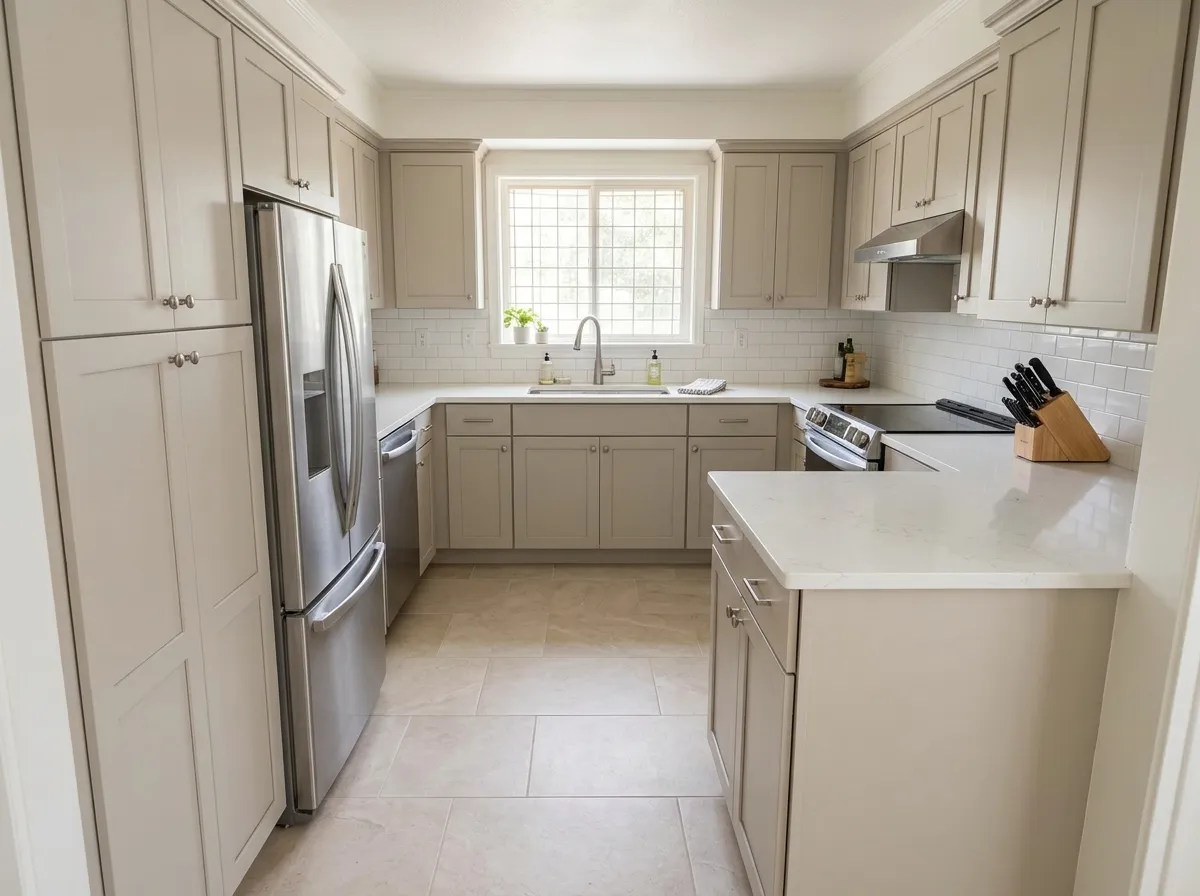
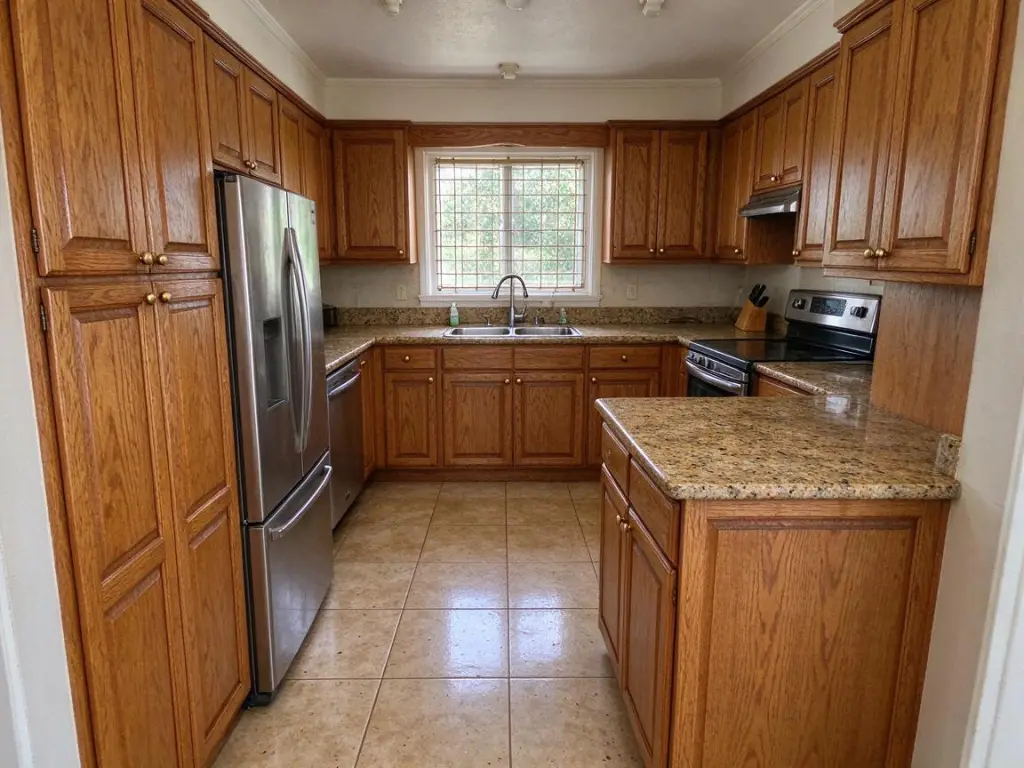
A transitional kitchen uses shaker cabinets in soft white, greige or gray, white quartz or marble-look counters, a subway or marble backsplash, brushed nickel or matte hardware and simple pendants. To see it on your own kitchen, upload a photo to AI Kitchen Redesign and choose Transitional; sign in with Google and your first 3 images are free.
What defines the style
- Cabinets
- Shaker or slim-frame doors in soft white, greige, gray or light wood.
- Countertops
- White quartz, marble or marble-look quartz with soft veining.
- Backsplash
- Subway tile, marble or a simple large tile in a neutral color.
- Floor
- Mid-tone wood or neutral porcelain tile.
- Colors
- White, greige, warm gray and taupe, with one muted blue or green.
- Lighting
- Simple drum, lantern or dome pendants and under-cabinet light.
More kitchens in this style
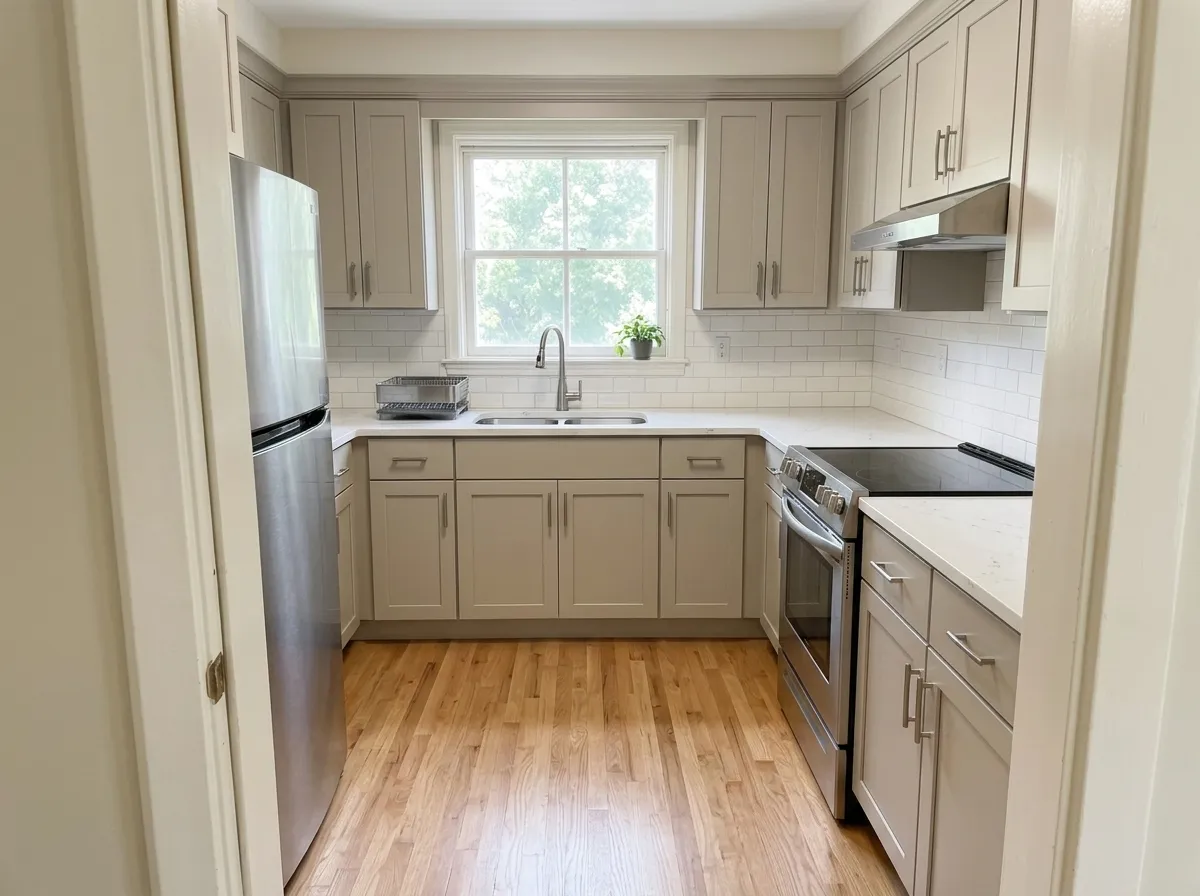
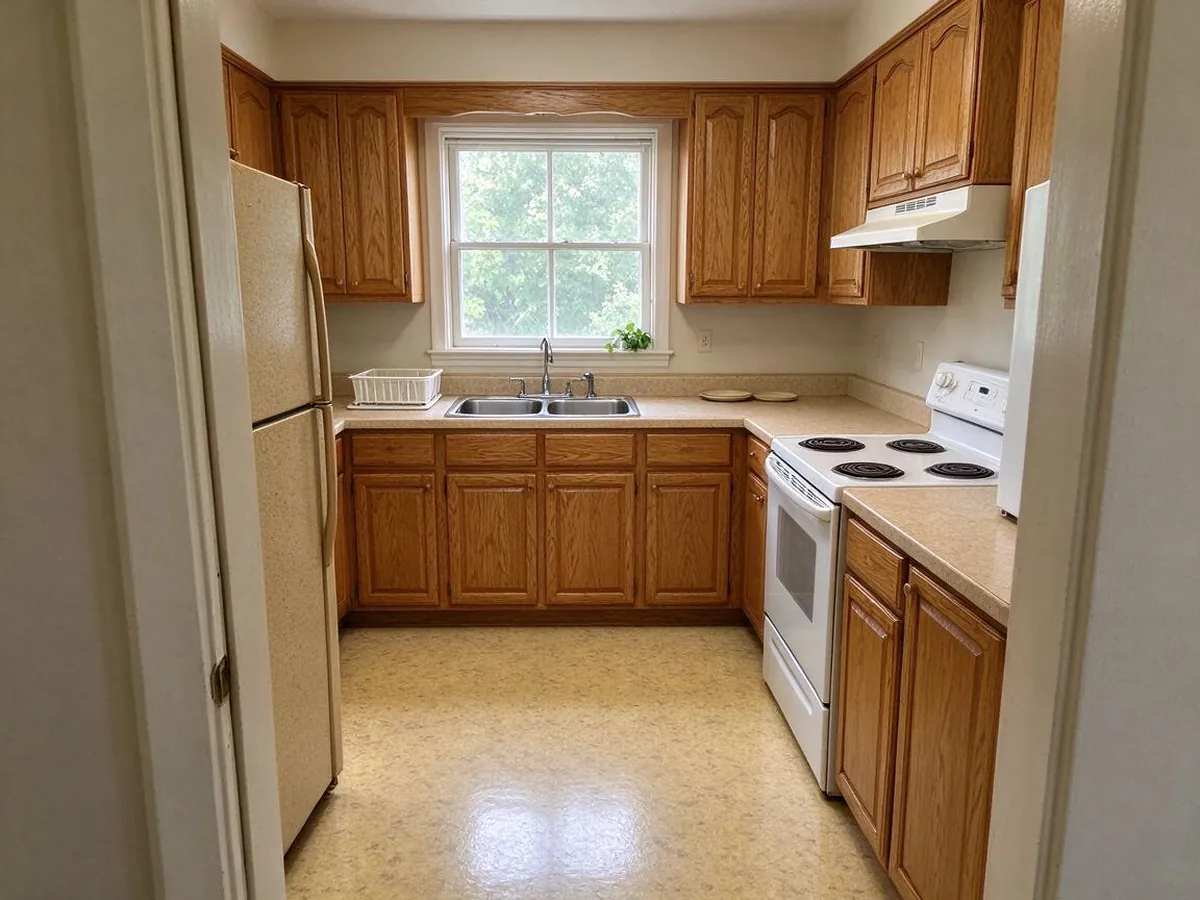 BeforeAfter
Get the look without a full remodel
- Repaint cabinets in soft white or greige and keep the existing shaker doors.
- Replace ornate hardware with brushed nickel or matte black bar pulls.
- Pick one classic detail, such as a marble backsplash, and keep the rest plain.
Transitional kitchen color palettes
Transitional palettes are calm and neutral. Most of the color comes from the cabinets and the counter, with wood and metal adding warmth.
Soft white and marble: soft white shaker cabinets, a white marble-look counter, a marble or white subway backsplash and brushed nickel pulls. It is the most common version and suits almost any house.
Greige and walnut: greige perimeter cabinets, a walnut or warm wood island, a white counter and matte black or bronze hardware.
Two-tone gray: light gray perimeter cabinets, a charcoal or slate island, a white counter and polished nickel. Good in open-plan rooms where the island faces the living area.
Navy or sage accent: white perimeter cabinets with a navy or sage island, a white counter and brass or nickel hardware. The accent stays on one piece.
Keep the undertones consistent. A greige cabinet next to a pink-beige counter or a blue-gray tile can look slightly off; pick neutrals that lean the same way.
Wall color is often a shade lighter or darker than the cabinets in the same family, which keeps the room calm and lets the counter and backsplash stand out a little.
Transitional vs traditional kitchen: the details that differ
Both use painted cabinets and stone counters, so the difference is in the details. Transitional uses flat-center shaker doors instead of raised panels, a square or eased counter edge instead of an ogee, and simple bar or cup pulls instead of ornate knobs.
A typical transitional pairing is shaker cabinets with little or no crown molding, a white quartz counter, a subway or marble backsplash, a mid-tone wood floor and simple pendants.
Transitional kitchens often borrow one modern element, such as a slab backsplash or a plain range hood, and one classic element, such as a marble counter or lantern lights.
Mixing metals works if you keep it to two, for example brushed nickel on the hardware and matte black on the lights.
Combinations to avoid: heavy corbels, carved doors and dark busy granite push the room back to traditional. High-gloss slab doors and integrated handles push it to modern. A transitional kitchen needs both sides in a quieter form.
Lighting is a good place to show the mix. A lantern shape in a matte black or brushed finish is classic in form and modern in finish, which is the transitional idea in one object.
Texture keeps a neutral kitchen from feeling flat: a honed counter, tile with slight color variation, linen shades or woven stools.
Which homes suit a transitional kitchen?
Almost any home. The style fits older houses and new builds alike: in an older house it respects the trim, and in a new build it adds warmth without looking themed.
Transitional works well when the kitchen is open to the living room, because the neutral palette lets furniture from either side sit nearby.
In a small kitchen, use the lightest version: soft white cabinets, a white counter and a light floor, with one wood element for warmth.
It suits people who want a kitchen that will not date quickly, and households where one person likes modern and the other likes traditional. It is often the compromise between the two.
It also suits a home you might sell, since the neutral finishes suit a wide range of tastes.
Renters can lean transitional with neutral textiles, a simple lantern or drum pendant if allowed, and a few wood and ceramic pieces.
In a large kitchen, a transitional palette can feel plain. Add interest through the island: a contrasting color, a wood top or a furniture-style base.
Transitional kitchen on a budget vs a full remodel
If you already have shaker doors, the Light refresh level may be all you need: paint the cabinets soft white or greige, change the hardware to brushed nickel or matte black and replace dated lights.
If you have raised-panel doors, the Remodel level can replace them with shaker doors and add a white quartz counter, a subway or marble backsplash and a new floor.
Full redesign makes sense if you want a larger island, open shelves in place of some wall cabinets, or a slab backsplash and plain hood for a more modern edge. Compare it with the Remodel level on the same photo.
Upload a photo of the marble or tile you like as a material reference, or use change one thing mode to test only a greige cabinet color or only a new backsplash.
If you cannot decide between transitional and traditional, generate both on the same photo. The difference is often clearer on your own walls than in examples.