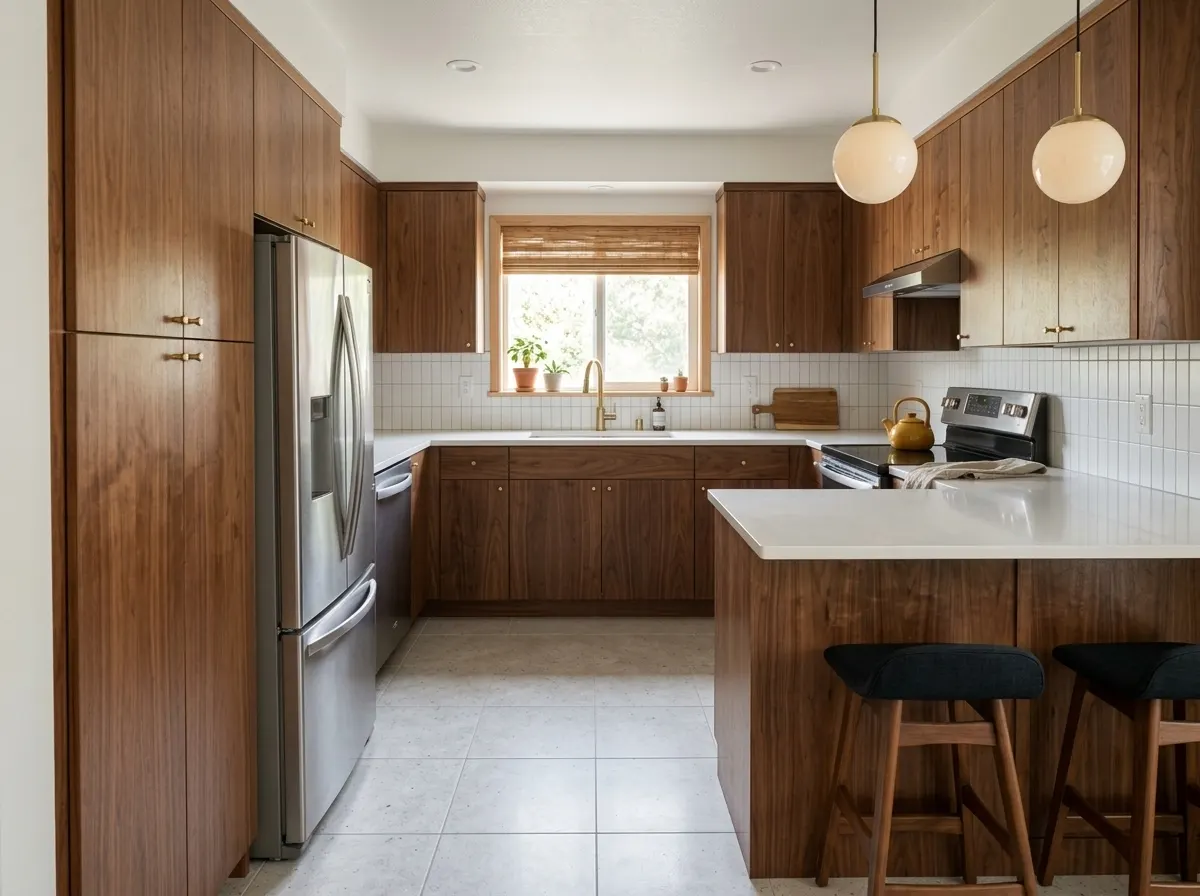
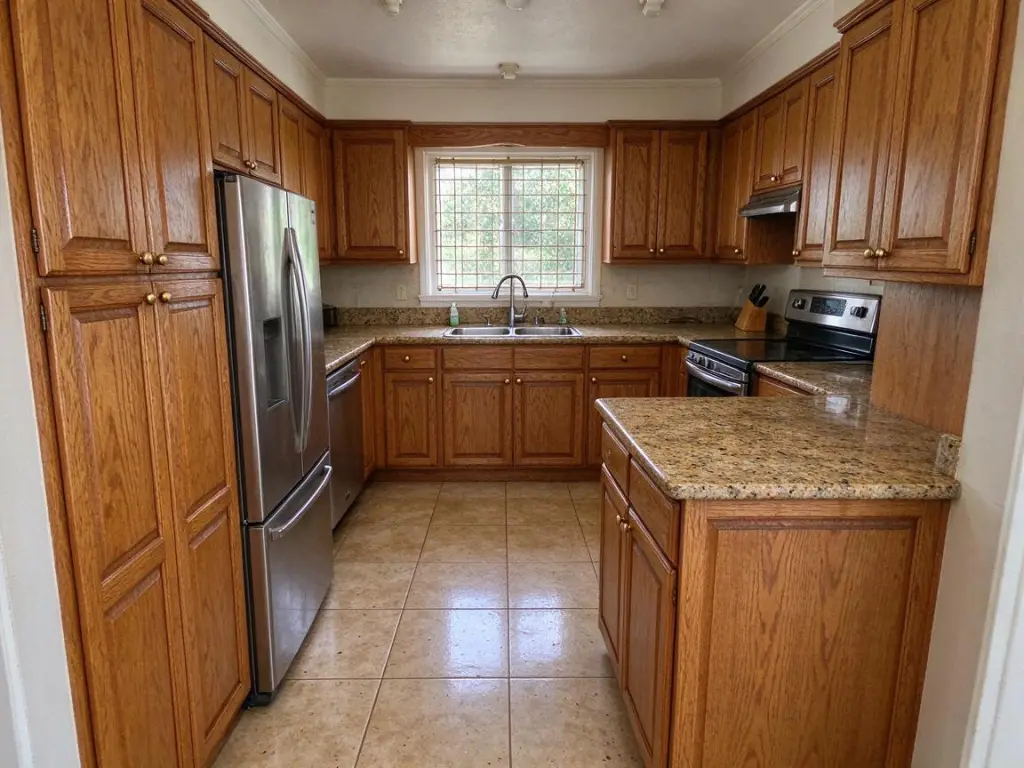
A mid-century modern kitchen uses flat-panel walnut or teak cabinets, a retro accent color such as mustard, teal or orange, simple white or terrazzo counters, geometric tile, and globe or cone pendant lights. To see your own kitchen this way, upload a photo to AI Kitchen Redesign and choose Mid-Century.
What defines the style
- Cabinets
- Flat walnut or teak doors with slim tapered or edge pulls.
- Countertops
- White quartz, laminate in a solid color, or terrazzo.
- Backsplash
- Geometric, hexagon or vertical stacked tile in a retro color.
- Floor
- Terrazzo, wood or patterned tile.
- Colors
- Walnut with mustard, teal, olive or burnt orange.
- Lighting
- Globe, cone or sputnik pendants.
More kitchens in this style
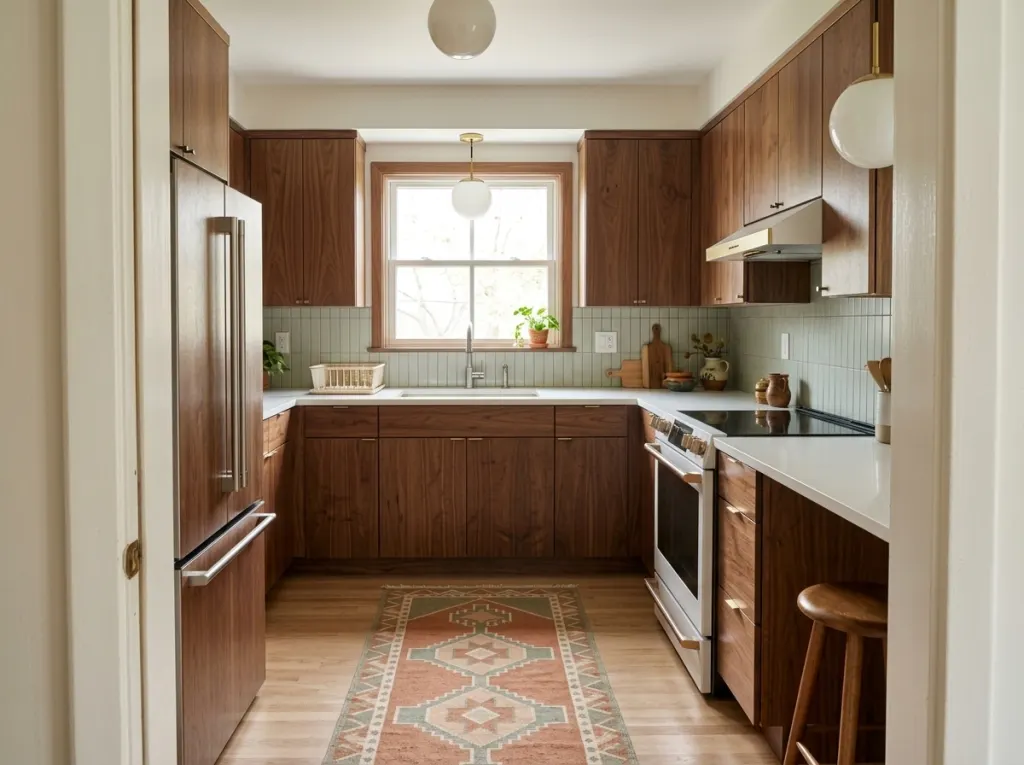
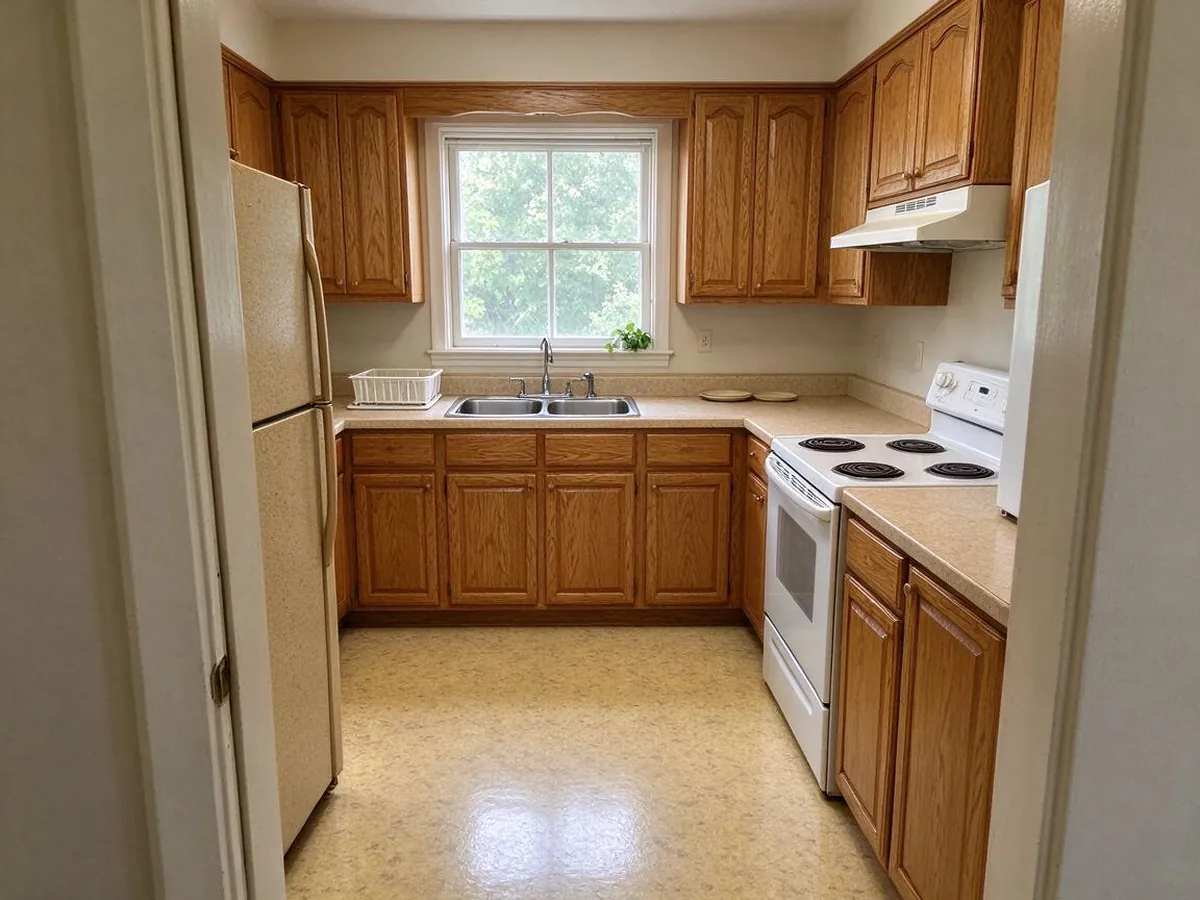 BeforeAfter
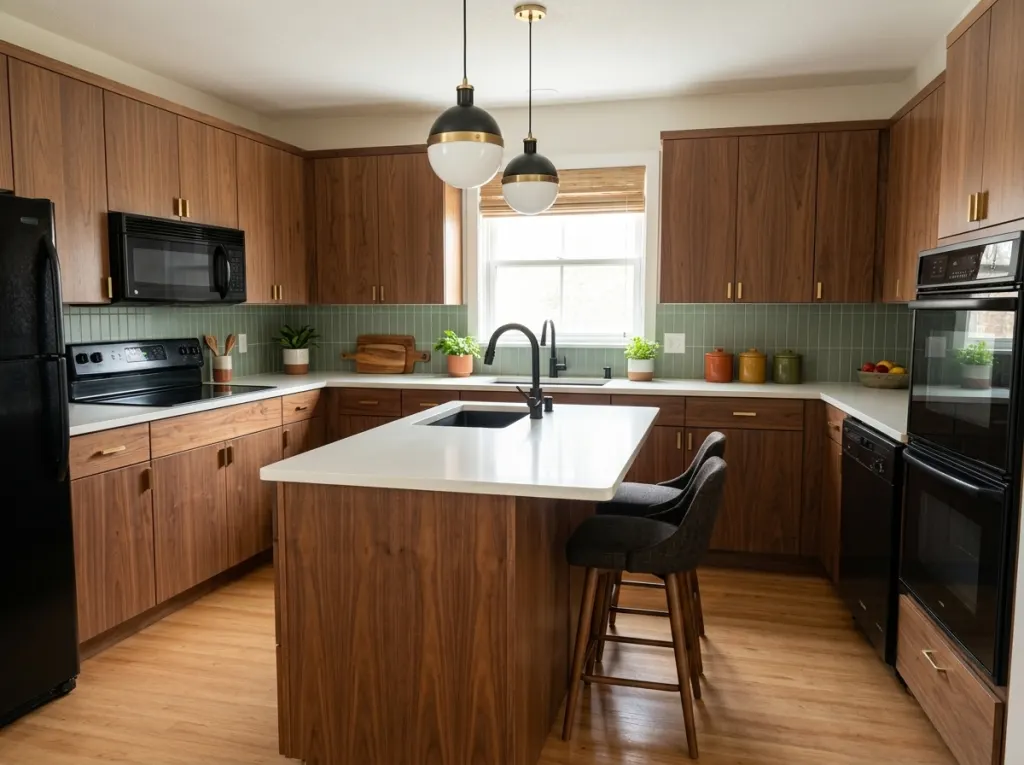
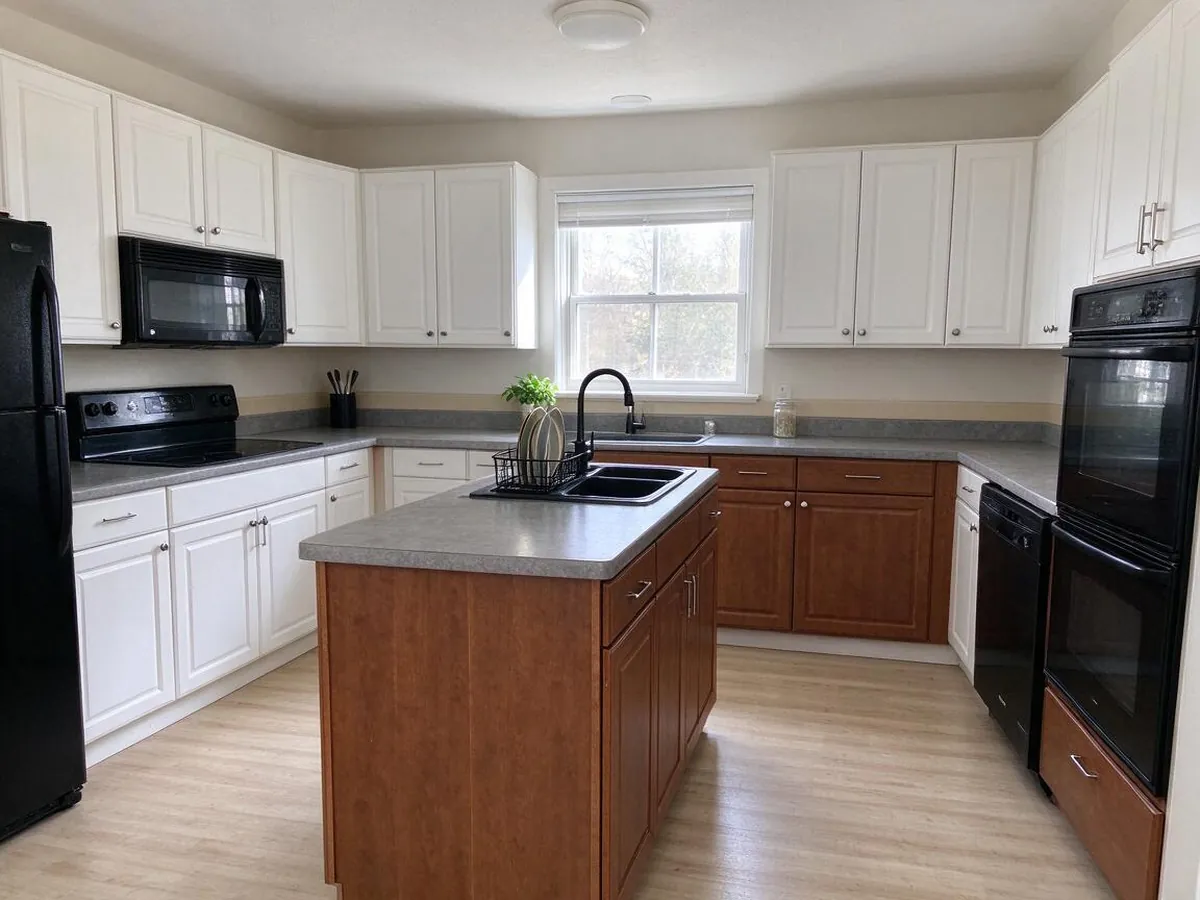 BeforeAfter
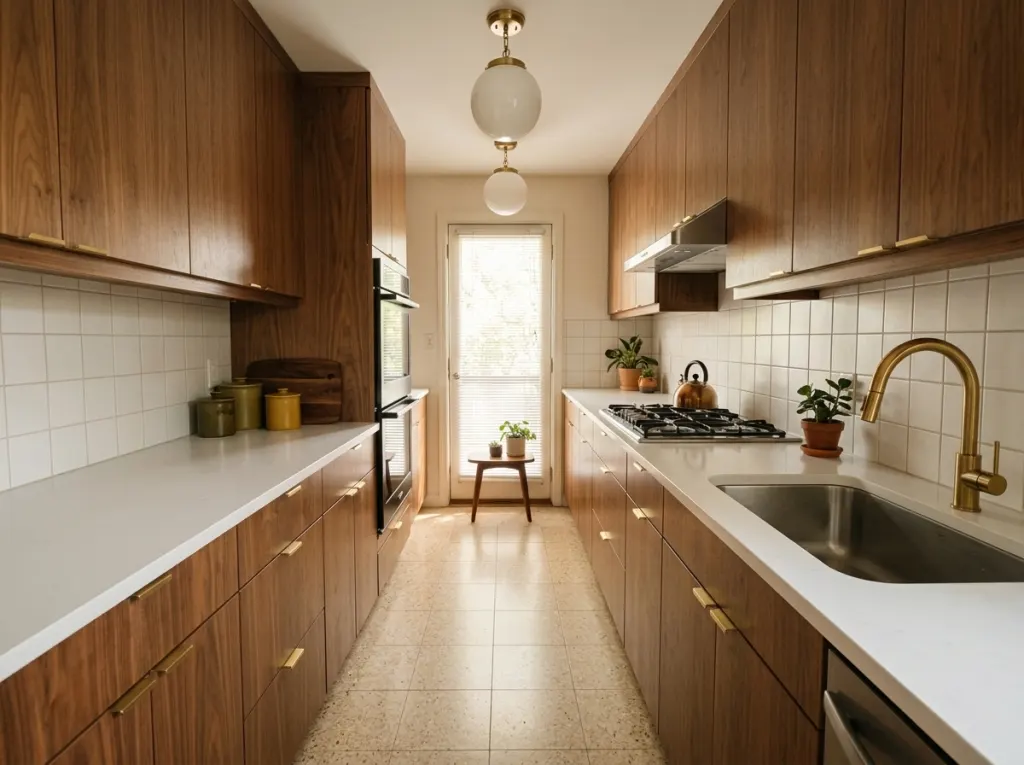
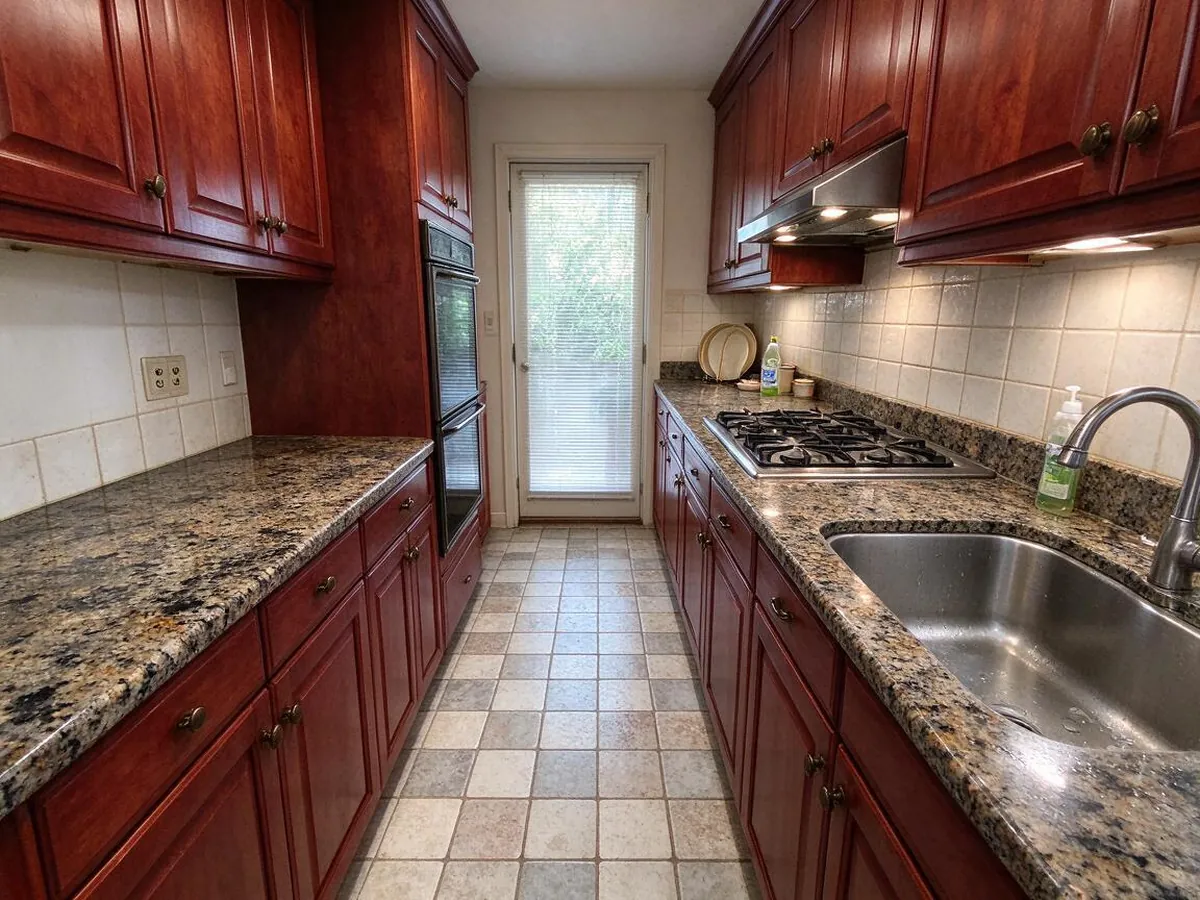 BeforeAfter
Get the look without a full remodel
- Add one retro color on the backsplash or island, not everywhere.
- Use walnut-veneer doors on existing cabinet boxes.
- Choose a globe or cone pendant over the table or island.
Mid-century modern kitchen color palettes
Mid-century palettes combine warm wood with one or two retro accent colors. Wood usually covers most of the cabinets, so the accent goes somewhere smaller: a backsplash, an island, a pendant or the chairs.
Walnut and white: walnut slab cabinets, a white counter, white walls and a mustard or teal pendant. This is the easiest version to live with and suits most rooms.
Wood tone matters more than the accent color. Walnut and teak have red and brown undertones that define the period; light oak can work, but the room will look more Scandinavian unless the accent colors and lighting are clearly retro.
Teak and teal: teak or warm oak cabinets, a teal or turquoise tile backsplash, a white or terrazzo counter and brass hardware. It feels lively and is very typical of the period.
Olive and orange: olive green lower cabinets, walnut uppers or shelves, a burnt orange accent in a pendant or stools, and a white counter. Keep the orange to one item.
Mustard and charcoal: mustard yellow island or lower cabinets, charcoal or white perimeter cabinets, a white counter and a terrazzo or wood floor.
Which materials go together in a mid-century kitchen?
A classic pairing is walnut or teak veneer slab cabinets with slim wooden or brass pulls, a white or terrazzo counter, a backsplash of colored square tile, vertical stacked rectangles or a geometric pattern, and a warm wood or terrazzo-look floor.
Terrazzo is very at home in this style, either as a counter or a floor. If you use it on both, choose different chip sizes or colors so the surfaces do not merge.
Tile shape helps date the kitchen. Small square tiles in a grid, vertical stacked rectangles and simple geometric patterns all fit, while subway tile in a brick pattern looks more farmhouse or traditional.
Laminate counters were common in the period and still fit, especially in white, pale gray or a soft color with a wooden edge.
Combinations to avoid: raised-panel doors, heavily veined marble, rustic distressed wood and too many retro colors at once. Two accent colors are enough; three or more starts to look like a theme rather than a kitchen.
Hardware in this style is low-key: slim wooden pulls, small brass knobs or long edge pulls. Large chunky handles change the proportions of the doors and look out of period.
Sculptural lighting carries the style: globe pendants, cone pendants and sputnik fittings. A good fitting over the table or island does as much as new cabinets.
Which homes suit a mid-century kitchen?
The style fits houses built from the late 1940s to the early 1970s best, since the kitchen can match the windows, floors and proportions already there. It also suits apartments and modern homes that want warmth.
If you live in a house from that era, look for what is already there before you plan: original wood floors, wide low windows or a wall opening to the dining room. Keeping these and matching the kitchen to them gives a more convincing result than a new kitchen in a period theme.
In a small kitchen, keep the wood on the lower cabinets, use white uppers or a single shelf and save the accent color for the backsplash. A dark walnut floor plus walnut cabinets in a small room can feel heavy.
In older period houses with ornate trim, a mid-century kitchen can look out of step. A softer version with oak slab doors and one teal or mustard element usually blends better.
Mid-century kitchens often open to a dining area. If yours does, carry the wood tone into the dining chairs or sideboard so the two spaces read as one.
Renters can add a globe or cone pendant if allowed, mid-century chairs or stools, a teak or walnut tray, and one colored object such as a mustard kettle or teal canister.
Mid-century kitchen on a budget vs a full remodel
Start with the details that carry the period: a globe or cone pendant, slim wooden or brass pulls, and paint in one accent color on the island or a wall. In the tool this is the Light refresh level: paint, hardware and lights.
The Remodel level replaces the cabinet fronts with walnut or teak veneer slab doors on the existing boxes, adds a white or terrazzo counter, a colored tile backsplash and a warm floor. This is where most of the look comes from.
Choose veneer over painted wood-effect finishes. The grain and slight variation of real veneer are a large part of why mid-century kitchens look warm.
Full redesign makes sense if you want a peninsula, a breakfast bar or to open the kitchen to the living room, as many mid-century plans did. Compare it with the Remodel level on the same photo.
Upload a photo of the walnut veneer or tile you have in mind as a material reference, or use change one thing mode to test only a teal backsplash on your current kitchen.