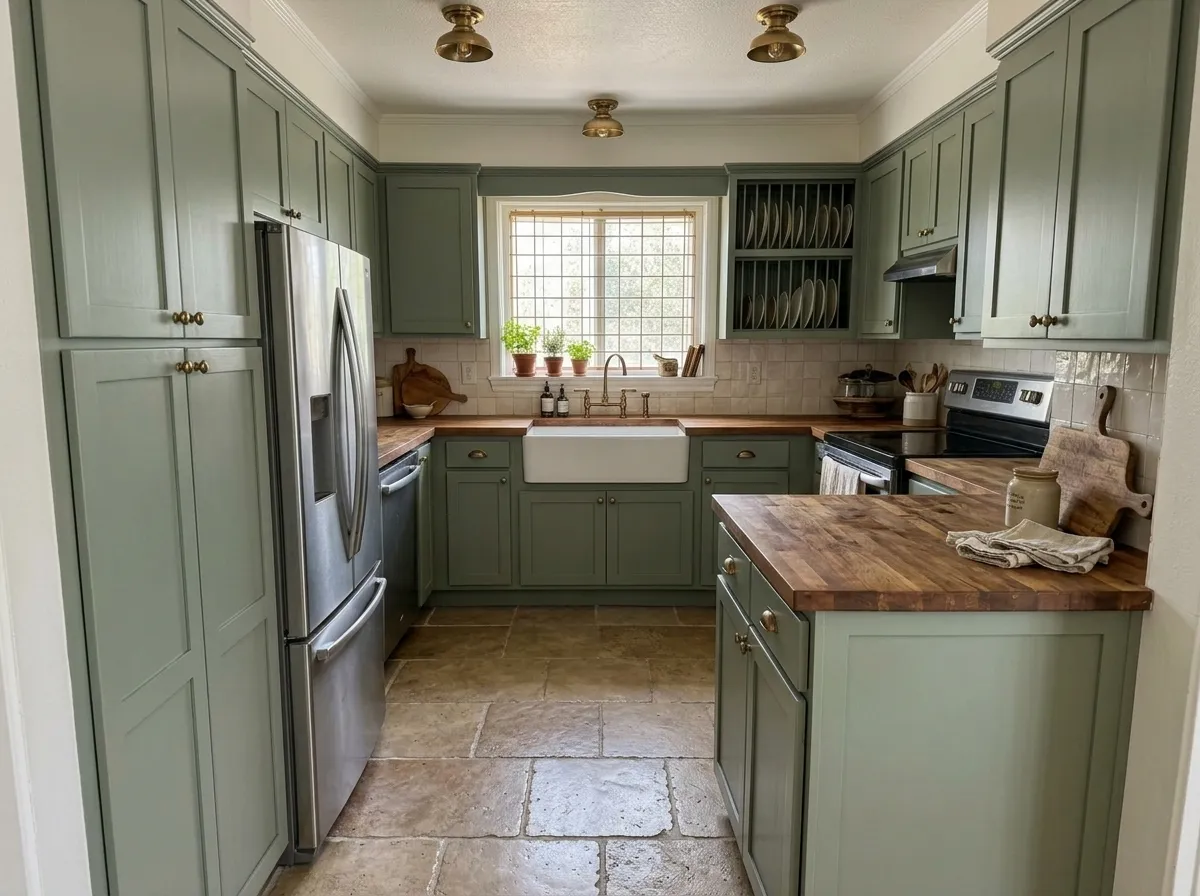
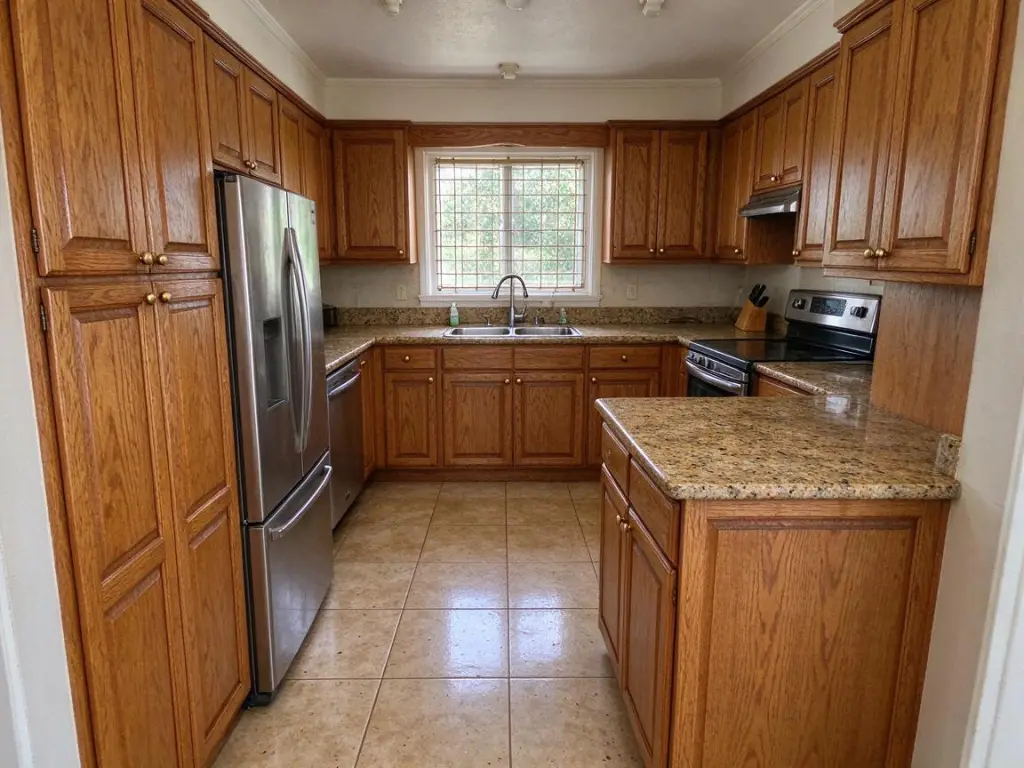
An English cottage kitchen uses painted shaker cabinets in sage, cream or soft blue, butcher block counters, a ceramic apron sink, open plate racks and vintage brass hardware. To see your own kitchen in this style, upload a photo to AI Kitchen Redesign and choose English Cottage; sign in with Google and your first 3 images are free.
What defines the style
- Cabinets
- Painted shaker or inset doors in sage, cream, soft blue or dusty pink.
- Countertops
- Butcher block, honed stone or a warm quartz.
- Backsplash
- Small handmade-look tile, beadboard or a plain painted wall.
- Floor
- Wood, terracotta or checkerboard tile.
- Colors
- Sage, cream, soft blue, dusty pink and warm wood.
- Lighting
- Fabric or glass pendants, small wall lamps, warm light.
More kitchens in this style
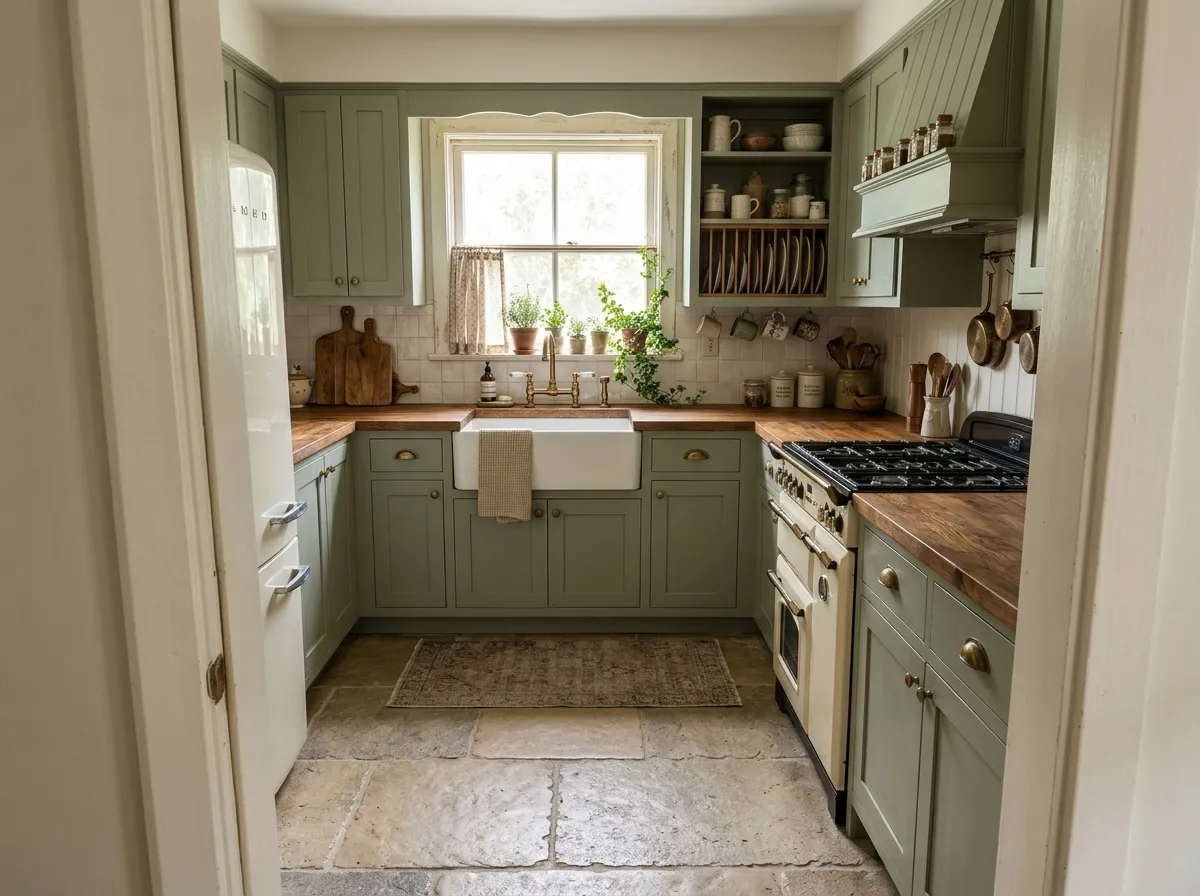
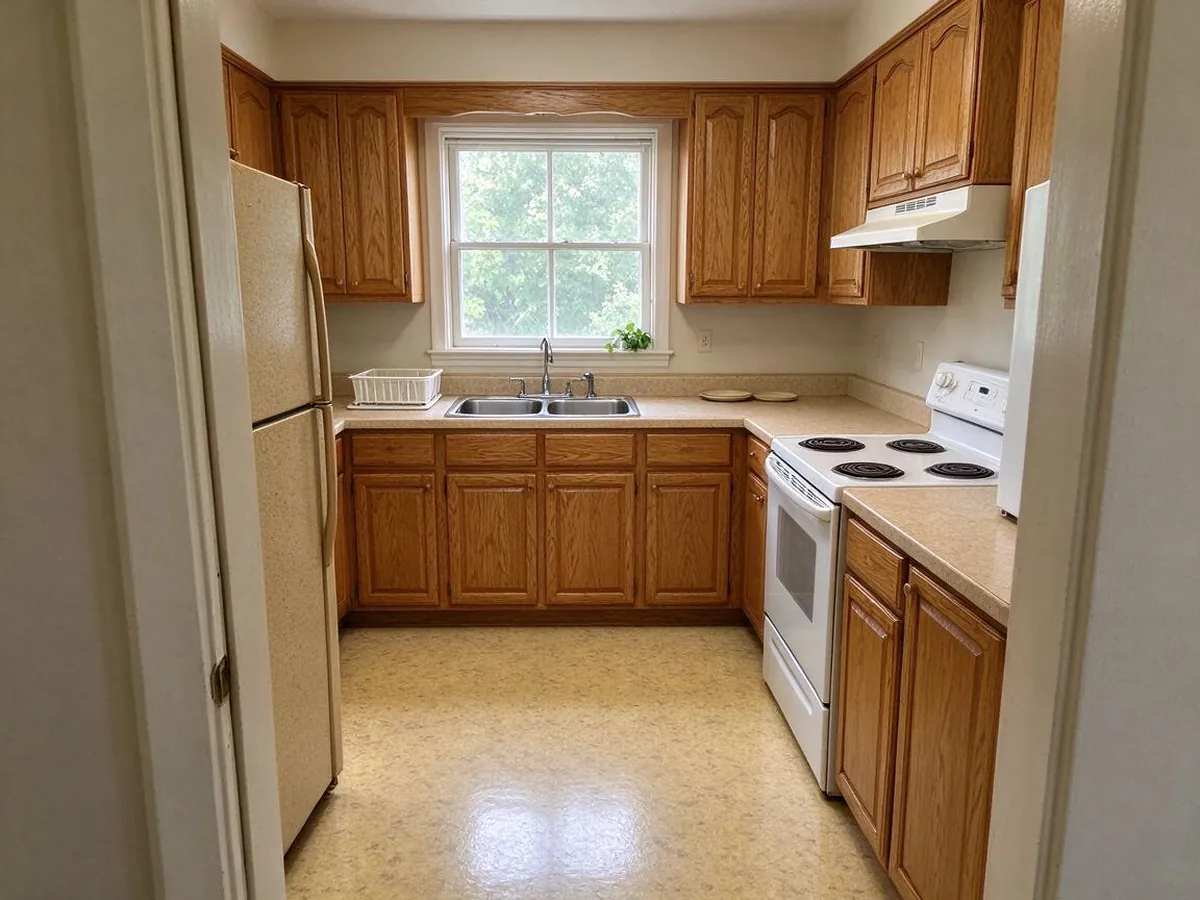 BeforeAfter
Get the look without a full remodel
- Paint cabinets sage or cream and add vintage brass cup pulls.
- Replace one upper cabinet with an open plate rack.
- Add a fabric skirt under the sink or along an open shelf.
English cottage kitchen color schemes
Cottage colors are muted and slightly gray, so they look as if they have been there for years.
Sage and cream: sage cabinets, cream walls, a butcher block counter and brass. The best-known version.
Soft blue and white: soft blue cabinets, white tile, a honed white counter and nickel or brass hardware.
Cream and checkerboard: cream cabinets, a black and cream or terracotta and cream checkerboard floor, and a wood counter.
Dusty pink and green: dusty pink lower cabinets, green walls or tile, and brass. A bolder choice that still feels cottage.
Patterned fabric, such as a floral or check sink skirt or curtain, can carry a second color without painting anything.
Pick colors in daylight in your own kitchen. Sage and soft blue shift a lot between warm and cool light, and a green that looks gray on a card can look much brighter on a whole run of cabinets.
Painting the inside of glass-front cabinets or the back of open shelves in a second color is a small way to add depth.
Cottage kitchen materials and pairings to avoid
A typical pairing: painted shaker or inset cabinets, butcher block counters, a ceramic apron sink, small handmade-look tile or beadboard, a wood or tile floor and vintage brass hardware.
Open plate racks, a freestanding dresser and a rail for mugs and utensils give the collected feel.
A range cooker, or a range set into a tiled alcove, fits the style well.
Mix materials as if they were added over time: a wood counter on one run, stone by the sink, a painted dresser that does not quite match the cabinets.
Combinations to avoid: high-gloss slab doors, waterfall quartz, large-format tile and handleless cabinets. These look too new. Florals on every surface can feel cluttered in a small room.
Unlacquered brass suits the hardware because it darkens with use, which fits the lived-in feel. Polished nickel works if you prefer a cooler look.
Butcher block needs oiling and care around the sink. If that sounds like too much work, use it only on the island or a baking area.
Lighting can be mixed too: a fabric pendant over the table, a small brass wall lamp by the shelves and warm under-cabinet light for working.
Which kitchens suit an English cottage style?
Small and older kitchens suit cottage best. The style is at home with low ceilings, small windows and rooms that are not perfectly square.
In a larger kitchen, use a freestanding dresser and a table to break up long runs of cabinets so the room stays cozy.
In a new build or apartment, add character with a ceramic sink, beadboard or a checkerboard floor.
The style suits people who like things on show and do not want a perfectly empty kitchen.
Cottage vs farmhouse: if your kitchen is small and you like color, cottage usually fits better; if it is large and you prefer white and wood, farmhouse does.
Renters can add a sink skirt, a wall plate rack, vintage china, a fabric pendant shade if allowed and a small rug.
Cottage kitchens often have a small dining corner. A bench under the window or a little round table with mismatched chairs fits the style well.
Cottage kitchen on a budget vs a full remodel
At the Light refresh level, paint the cabinets sage, cream or soft blue, change the hardware to vintage brass cup pulls and knobs, and add a fabric or glass pendant.
Swapping one upper cabinet for an open plate rack costs little and changes the room a lot.
The Remodel level adds butcher block counters, a handmade-look tile or beadboard backsplash, a wood or checkerboard floor, and shaker doors if you have slab doors now.
Full redesign suits you if you want an apron sink under the window, a range in a tiled alcove or a freestanding dresser in place of some cabinets. Compare it with the Remodel level on the same photo.
Upload a photo of a paint swatch or tile as a material reference, or use change one thing mode to try only a sage cabinet color.
A painted floor or a checkerboard vinyl over an old floor is a cheaper way to test the look before you lay tile.