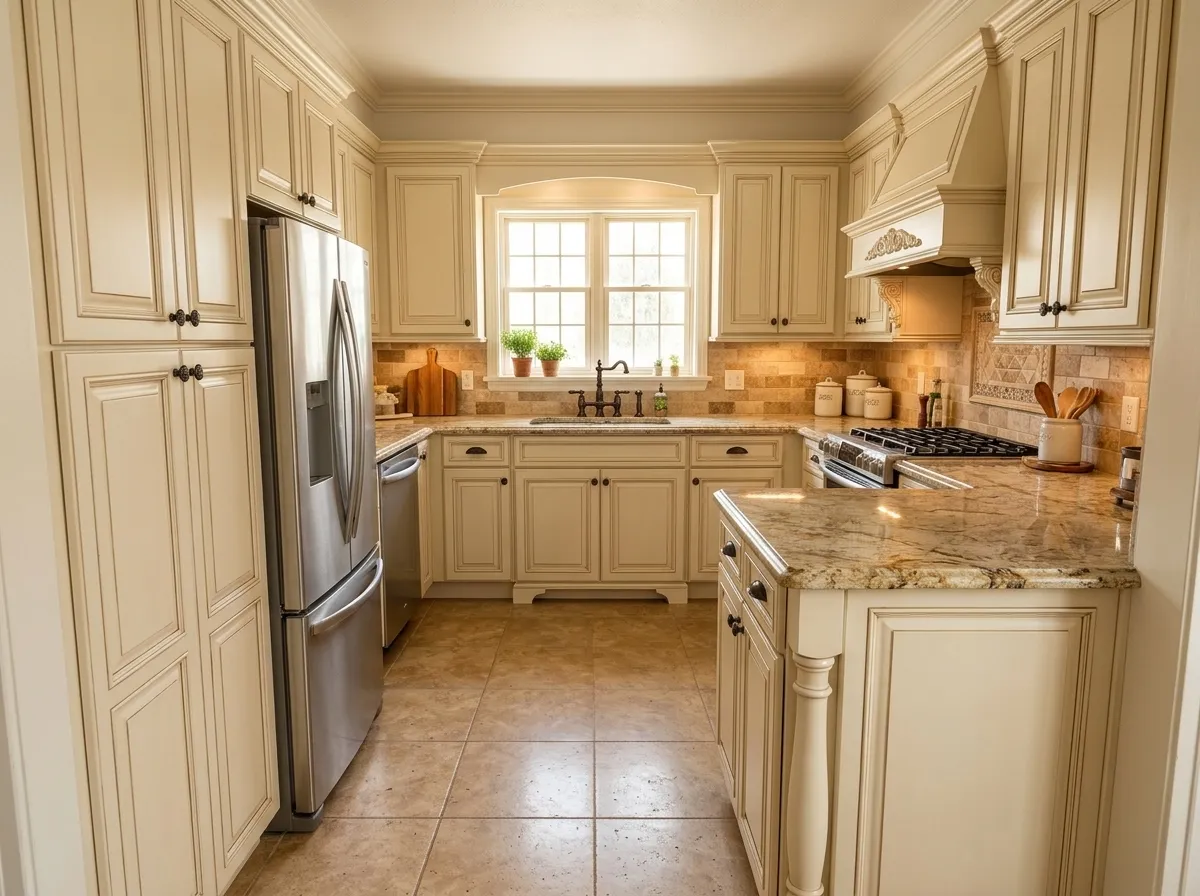
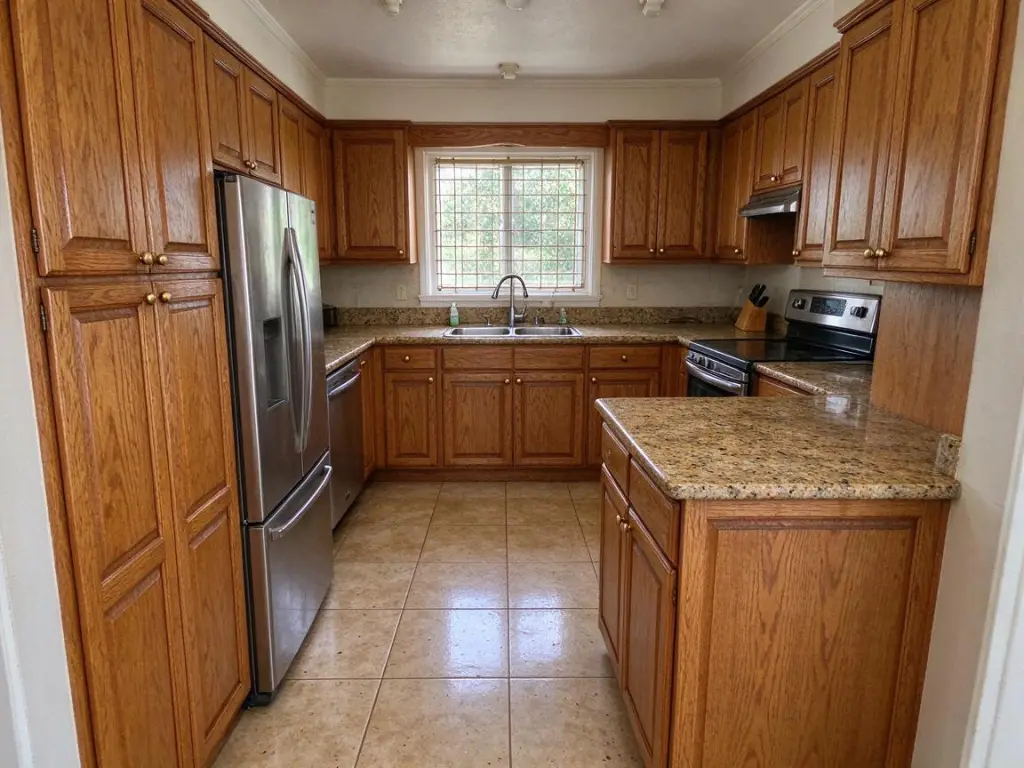
A traditional kitchen uses raised-panel cabinets in cream, warm white or stained wood, crown molding, granite or marble counters, a framed range hood and oil-rubbed bronze or polished nickel hardware. To preview your own kitchen this way, upload a photo to AI Kitchen Redesign and pick Traditional; sign in with Google and your first 3 images are free.
What defines the style
- Cabinets
- Raised-panel or inset doors in cream, warm white or stained wood, finished with crown molding.
- Countertops
- Granite, marble or a warm quartz with soft veining, often with a decorative edge.
- Backsplash
- Marble or ceramic tile, often with a feature panel behind the range.
- Floor
- Mid-tone to dark hardwood, stone or classic tile.
- Colors
- Cream, warm white and wood, with bronze, brass or nickel accents.
- Lighting
- Lantern or bell pendants, a small chandelier over the island and under-cabinet light.
More kitchens in this style
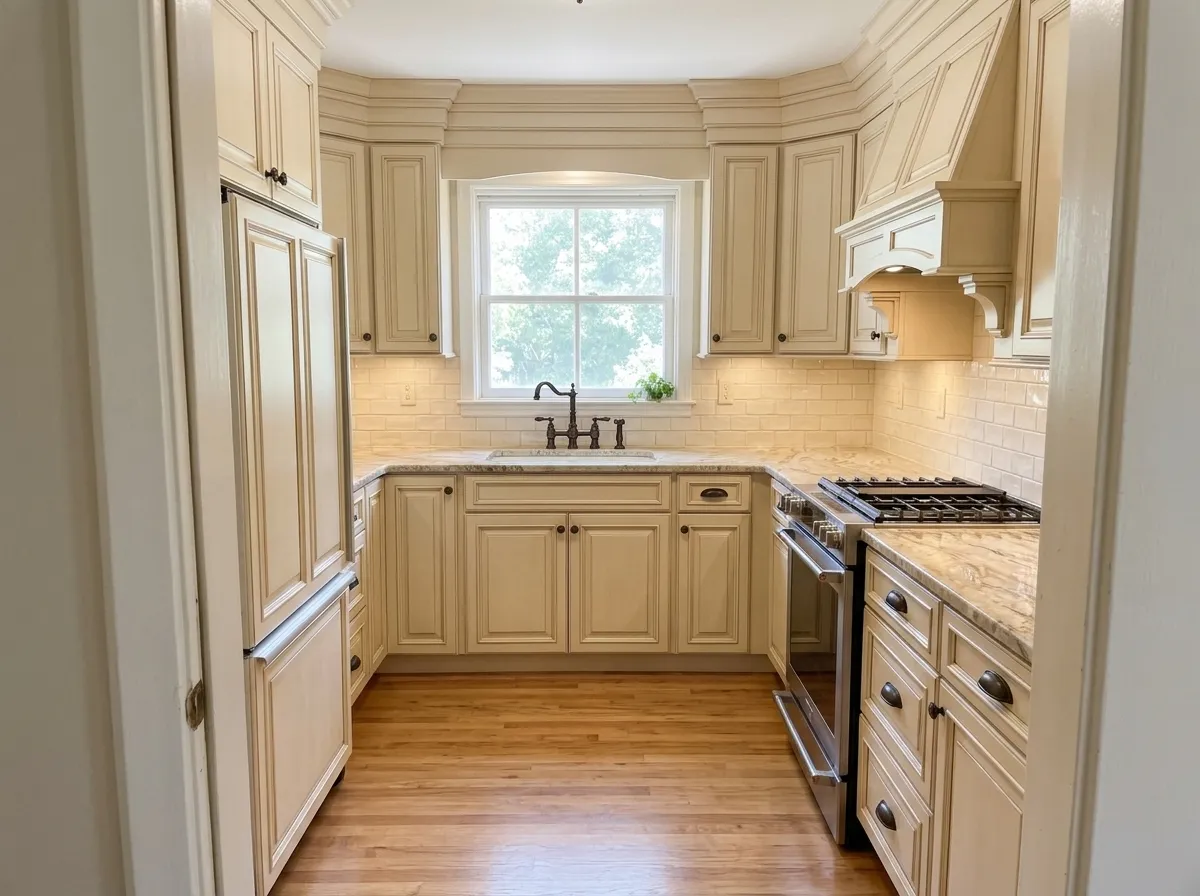
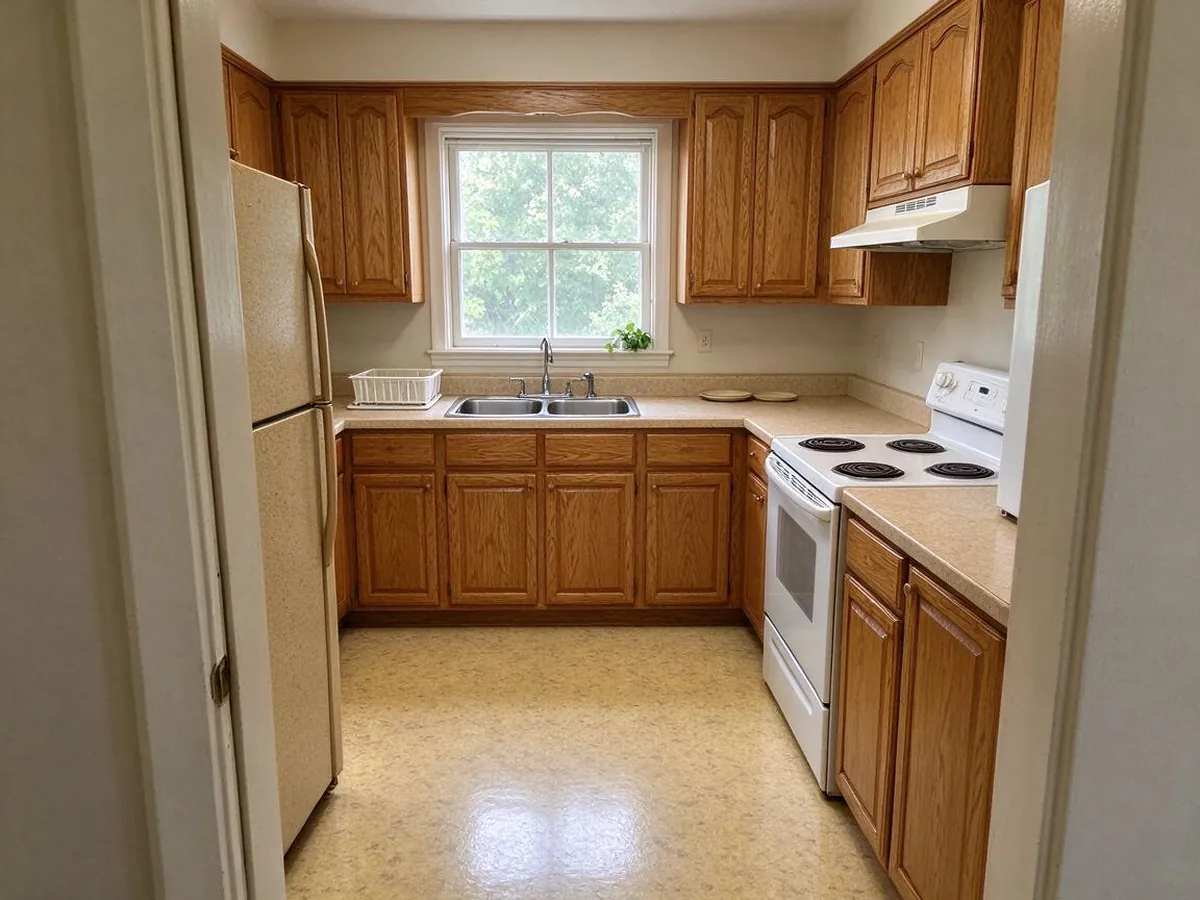 BeforeAfter
Get the look without a full remodel
- Add crown molding to the tops of existing cabinets.
- Swap plain knobs for oil-rubbed bronze or polished nickel knobs and cup pulls.
- Frame the range with a hood surround or a tile panel behind the cooktop.
Traditional kitchen color schemes
Traditional palettes are warm and layered. The cabinets are usually cream, warm white or stained wood, and the counter, floor and hardware add depth around them.
Cream and cherry: cream perimeter cabinets, a cherry or walnut-stained island, a warm granite counter and oil-rubbed bronze hardware. It is the most classic version and suits larger kitchens.
Warm white and marble: warm white cabinets, white marble with gray veining, polished nickel hardware and a mid-tone wood floor. Lighter, and easier in a smaller room.
Stained wood throughout: medium oak or cherry cabinets with a cream or beige granite counter and a cream tile backsplash. Keep the walls light so the wood does not close the room in.
Deep green or navy island: a painted island in hunter green or navy with cream perimeter cabinets and brass hardware. This is a common way to add color without leaving the style.
Choose whites with a hint of yellow or red rather than a stark white. Next to wood floors and bronze or brass, a cool white looks clinical.
A traditional kitchen can also take a muted red or deep blue in small doses, such as a painted range hood or a patterned runner, as long as the cabinets stay quiet.
Traditional kitchen materials and combinations to avoid
A typical pairing: raised-panel or inset painted cabinets with crown molding, a granite or marble counter with a decorative edge, a marble or ceramic tile backsplash, and a hardwood or stone floor.
The range wall is usually the focal point. A framed hood with corbels, a tile or marble panel behind the cooktop and matching cabinets on either side give the kitchen a center.
Furniture details help a lot: an island with turned legs or a furniture-style base, glass-front upper cabinets, a plate rack or an open hutch section.
Keep to one or two metals. Oil-rubbed bronze reads warm and slightly rustic; polished nickel and unlacquered brass read more formal.
Combinations to avoid: high-gloss slab doors, waterfall counter edges, very thin modern counters and stark black-and-white contrast. Too many decorative layers on one wall, such as corbels, glass doors, molding and patterned tile together, can make the room feel busy.
If you like the warmth but find the ornament fussy, the transitional style keeps the same palette with plainer shaker doors and simpler hardware. Generate both on the same photo to compare.
Appliances can break the look. Panel-ready dishwashers and fridges, or at least one consistent finish, keep the furniture feel; a large stainless fridge in the middle of cream cabinets draws the eye away.
Which kitchens suit a traditional style?
Older houses with deep trim, paneled doors and original wood floors suit a traditional kitchen, because the kitchen then matches the rest of the house.
Larger kitchens can carry crown molding, a framed hood and a furniture-style island without feeling crowded. Rooms with high ceilings suit stacked upper cabinets or molding that runs to the ceiling.
In a small kitchen, keep the cabinets light, use simple raised panels rather than heavily carved doors, and limit decoration to the range wall. Glass-front uppers make a small room feel less closed in.
New builds can take a traditional kitchen, but it helps to add some trim nearby, such as casing around the kitchen doorway, so the room does not look out of place.
The style suits people who want a warm, slightly formal kitchen that also works as a place to sit and talk. An island with seating or a breakfast table fits naturally.
Renters can add classic touches without touching the cabinets: a bell or lantern pendant if allowed, a runner rug, a marble pastry board, brass or bronze canisters and framed art.
If your home has a formal dining room next to the kitchen, carry the same wood tone or molding profile into both rooms so they read as one house.
Traditional kitchen on a budget vs a full remodel
Start with the Light refresh level: repaint the cabinets cream or warm white, change knobs and pulls to bronze or nickel, and replace the ceiling light with a lantern or bell pendant. On flat doors, applied molding can suggest a panel.
Adding crown molding to existing cabinets is a small job that makes a large change. It works best when the cabinets already reach close to the ceiling.
The Remodel level replaces the cabinet doors with raised-panel or inset doors and adds a granite or marble counter, a tile backsplash and a hardwood or stone floor. This is where most of the traditional look comes from.
Full redesign suits you if you want a framed range hood, a furniture-style island or a layout with matching cabinets around the range. Compare it with the Remodel level on the same photo.
Upload a photo of the marble or door profile you like as a material reference, or use change one thing mode to test only the cabinets or only the countertop on your current kitchen.