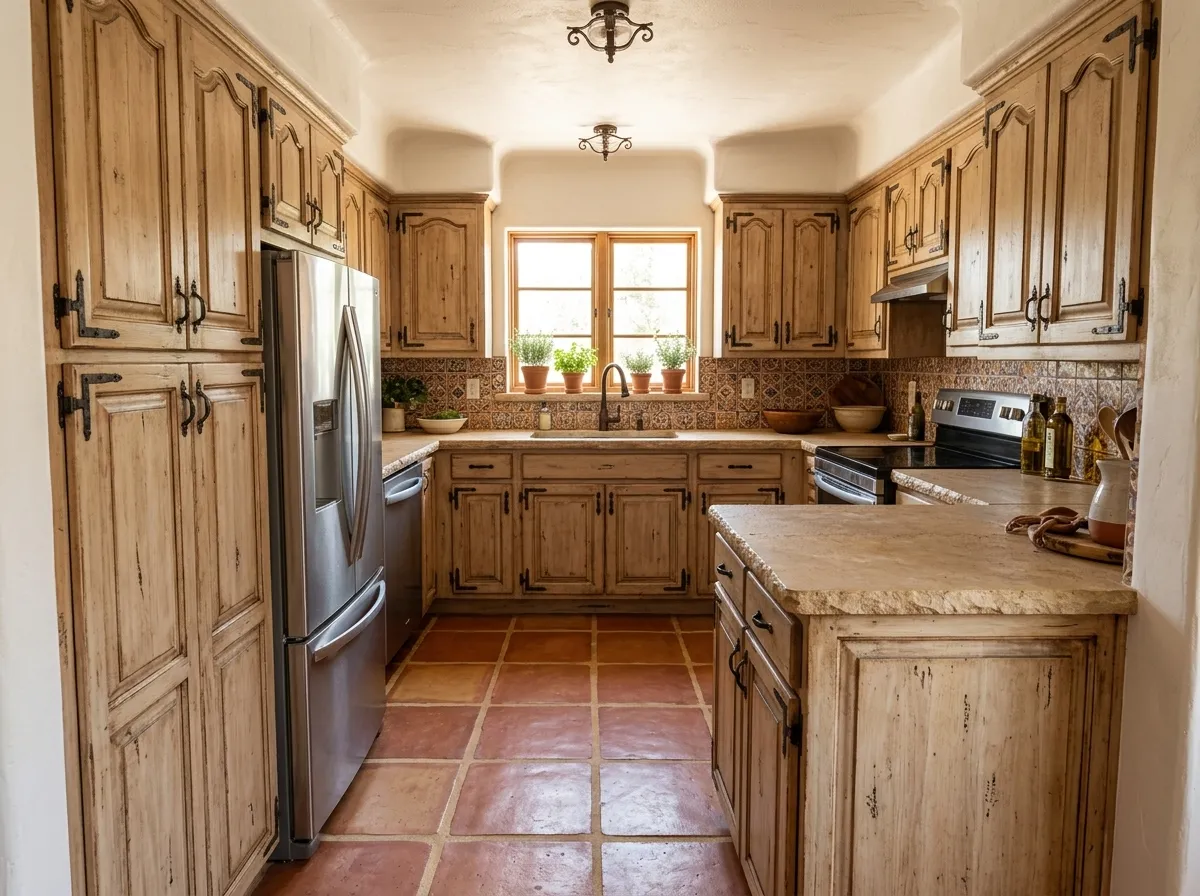
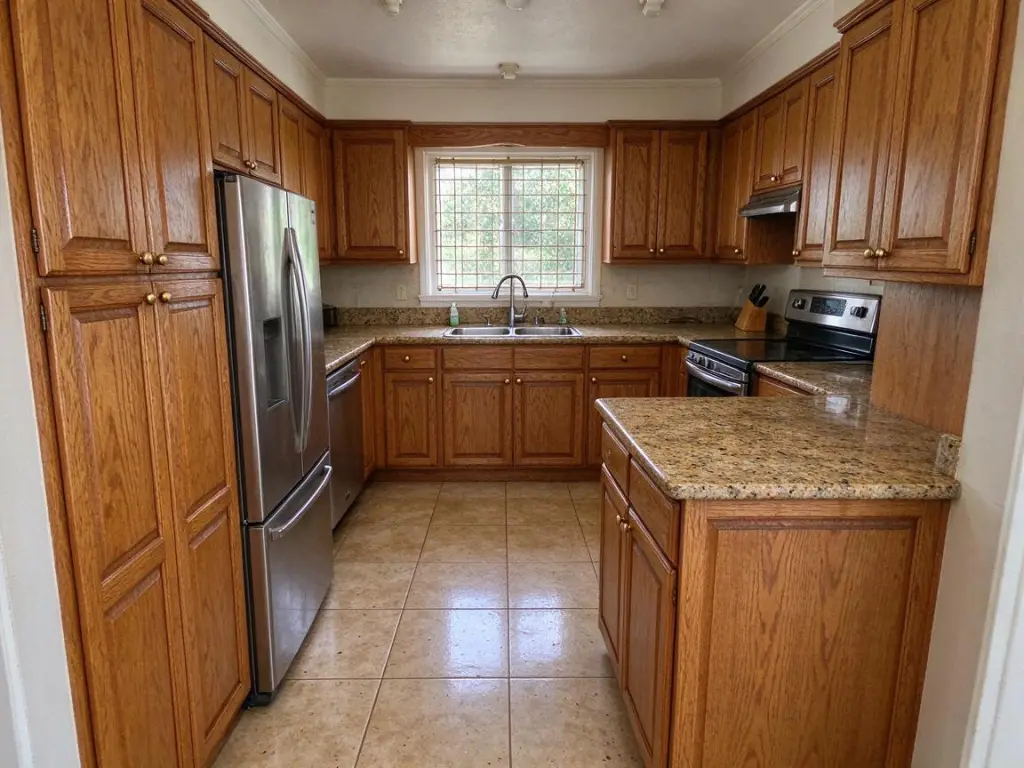
A Mediterranean kitchen uses warm white plaster walls, painted or natural wood cabinets, a patterned ceramic tile backsplash, a terracotta floor and wrought iron lights in a sun-washed warm palette. To preview your own kitchen this way, upload a photo to AI Kitchen Redesign and pick Mediterranean; sign in with Google and your first 3 images are free.
What defines the style
- Cabinets
- Natural wood, or painted warm white, olive or blue, often with simple framed doors.
- Countertops
- Honed stone, travertine, warm granite or tile.
- Backsplash
- Patterned ceramic tile, often blue and white or earth tones.
- Floor
- Terracotta, stone or encaustic-style patterned tile.
- Colors
- Warm white, terracotta, olive, ochre and sea blue.
- Lighting
- Wrought iron pendants, lanterns and warm light.
More kitchens in this style
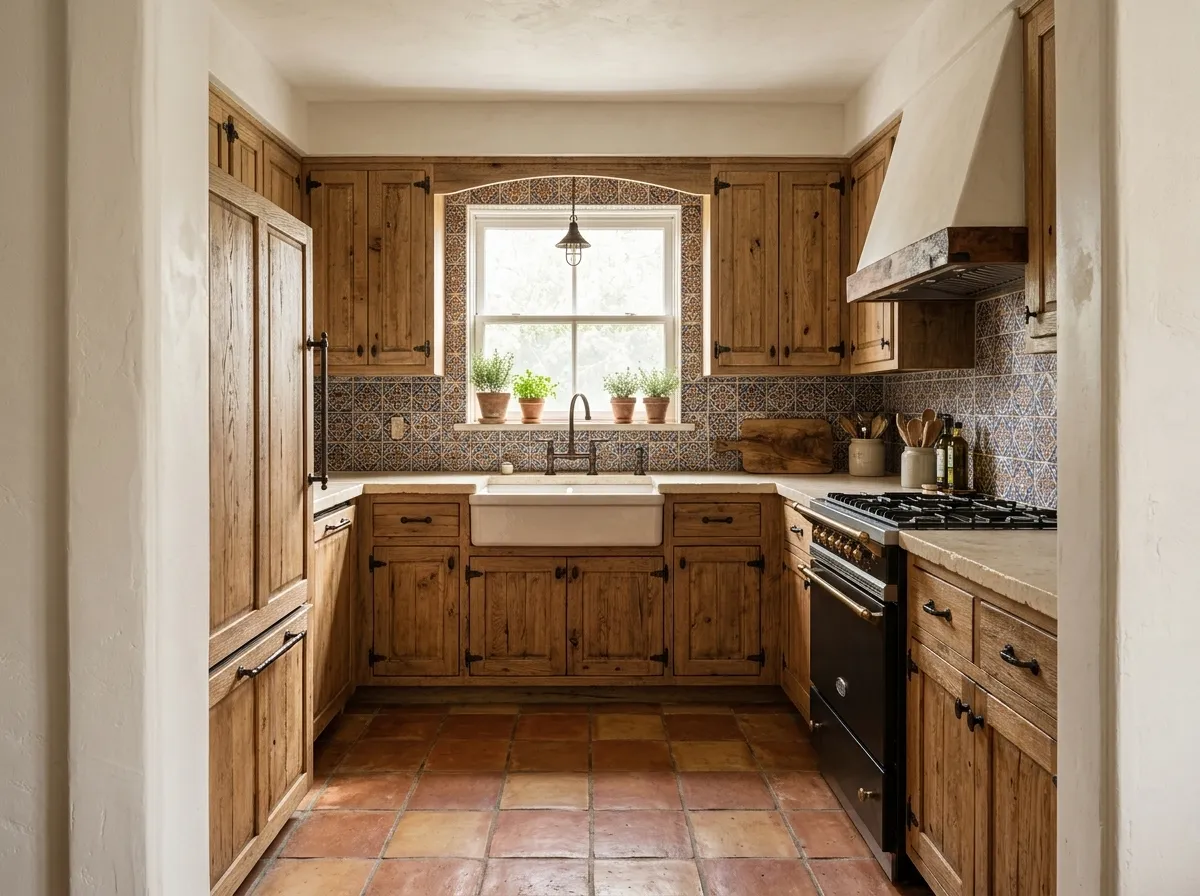
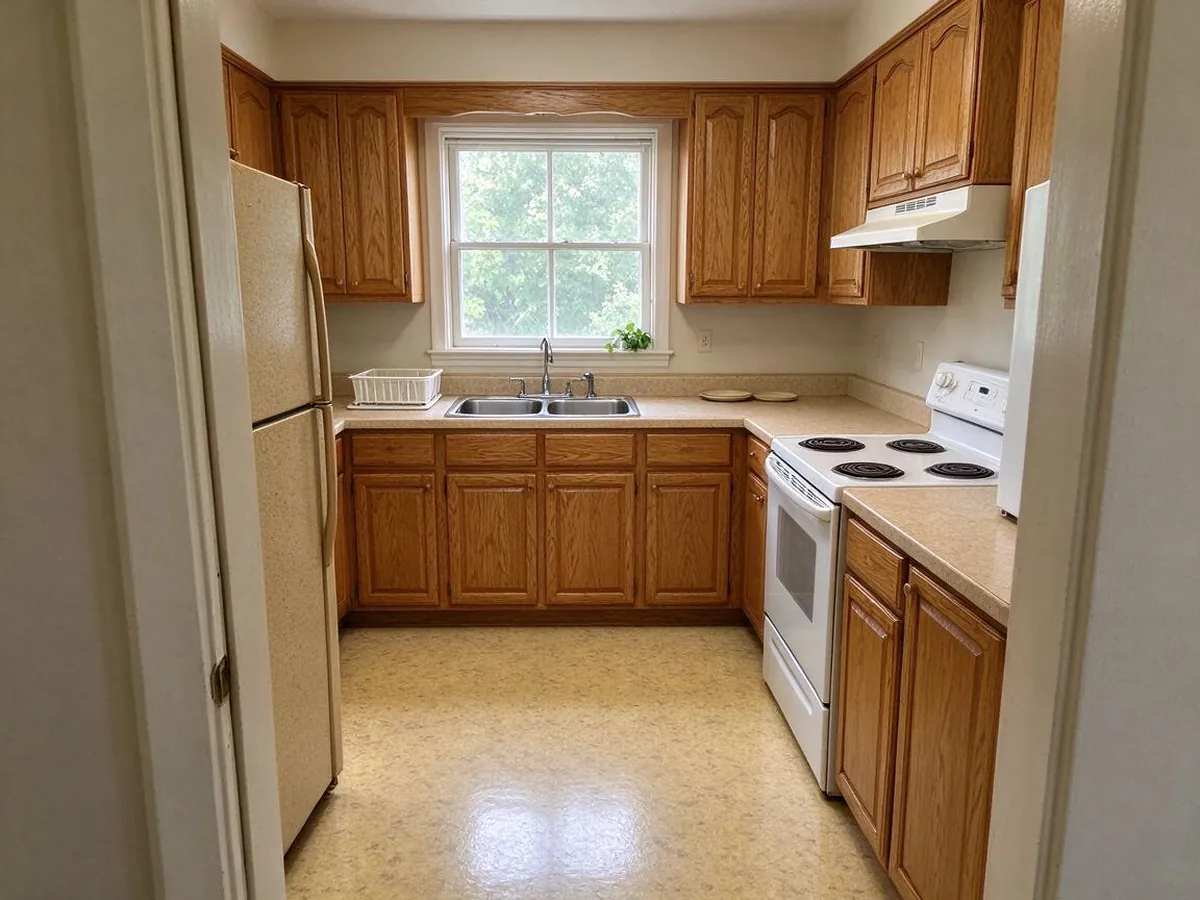 BeforeAfter
Get the look without a full remodel
- Add a patterned tile backsplash behind the range or sink.
- Use limewash or plaster-look paint on the walls for texture.
- Hang a wrought iron or terracotta pendant over the island or table.
Mediterranean kitchen color palettes
Mediterranean palettes start with warm white plaster and add earth or sea colors.
Spanish warmth: warm white walls, natural wood cabinets, a terracotta floor and a patterned tile backsplash in rust, ochre and blue.
Greek white and blue: white plaster walls and cabinets, a blue painted island or shutters, a light stone counter and a blue and white tile backsplash.
Tuscan earth: ochre or warm beige walls, stained wood cabinets, a warm granite or travertine counter and wrought iron.
Olive and plaster: olive green cabinets, warm white plaster walls, a honed stone counter and a terracotta floor. A calmer, newer version.
Let the tile carry the pattern and keep other surfaces plain. A busy backsplash next to busy granite and a patterned floor compete for attention.
Daylight changes these colors a lot. Warm whites and ochres that look right in a sunny kitchen can look muddy in a north-facing room, where a whiter plaster and blue work better.
Blue works best in one place: an island, the window frames or the tile. Painting cabinets, walls and tile all in blue makes the room feel themed.
Spanish, Greek or Tuscan: Mediterranean kitchen materials
A typical pairing: plaster or limewash walls, natural or painted wood cabinets, a honed stone or travertine counter, a patterned tile backsplash, a terracotta floor and wrought iron hardware and lights.
Spanish-style kitchens lean on terracotta, dark wood beams and colorful tile. Greek-style kitchens use whitewashed plaster, built-in shelves and blue accents. Tuscan kitchens use stained wood, stone and warmer walls.
Arches and built-in plaster shelves are characteristic. Where you cannot build them, a plaster range hood gives a similar feel.
Open shelving with ceramics, oil bottles and wood boards suits the style.
Combinations to avoid: high-gloss slab doors, cool gray quartz, chrome and stainless everywhere, and cold white LED light. They fight the warm, handmade feel.
Travertine and honed limestone suit the style better than polished stone. Their soft, slightly porous look matches plaster and terracotta.
Hardware can be simple: wrought iron or aged brass knobs and pulls, or wooden knobs on painted doors.
Which kitchens suit a Mediterranean style?
Homes in warm climates, Spanish-style and stucco houses, and kitchens with good daylight suit the style best.
In a darker kitchen, use the Greek version with white plaster and blue accents rather than the darker Tuscan version.
In a small kitchen, keep the cabinets white or light wood and use patterned tile only on the backsplash.
In an apartment or new build, add texture with limewash paint and a terracotta-look floor so the room does not look flat.
The style suits people who cook with fresh ingredients and like oils, herbs and bowls on show rather than hidden away.
Renters can add a patterned rug, ceramic dishes on open shelves, terracotta pots with herbs, and a woven or iron pendant if allowed.
A Mediterranean kitchen pairs well with outdoor dining. If the kitchen opens to a patio or balcony, use the same terracotta or tile on both sides so the spaces connect.
A large kitchen can carry a plaster hood, beams and a long run of patterned tile. In a narrow kitchen, keep the walls plain and use pattern only behind the sink or range.
Mediterranean kitchen on a budget vs a full remodel
At the Light refresh level, repaint the cabinets warm white, olive or blue, change the hardware to wrought iron or aged brass and add a wrought iron pendant.
The Remodel level adds a patterned ceramic backsplash, a honed stone or travertine counter, terracotta or stone-look flooring and new wood or painted doors.
Full redesign suits you if you want a plaster range hood, arched niches, built-in shelves or wood beams. Compare it with the Remodel level on the same photo.
Upload a photo of a tile you like as a material reference so the AI follows that pattern, or use change one thing mode to test only the backsplash or only the floor.
If you cannot decide between the Spanish and Greek versions, use the same photo for both: one with terracotta and rust tile, one with white plaster and blue.
Peel-and-stick patterned tile is a low-cost way to test a pattern on the backsplash before you commit to real tile.
Limewash or plaster-look paint on one wall is one of the cheapest ways to add the texture of the style.