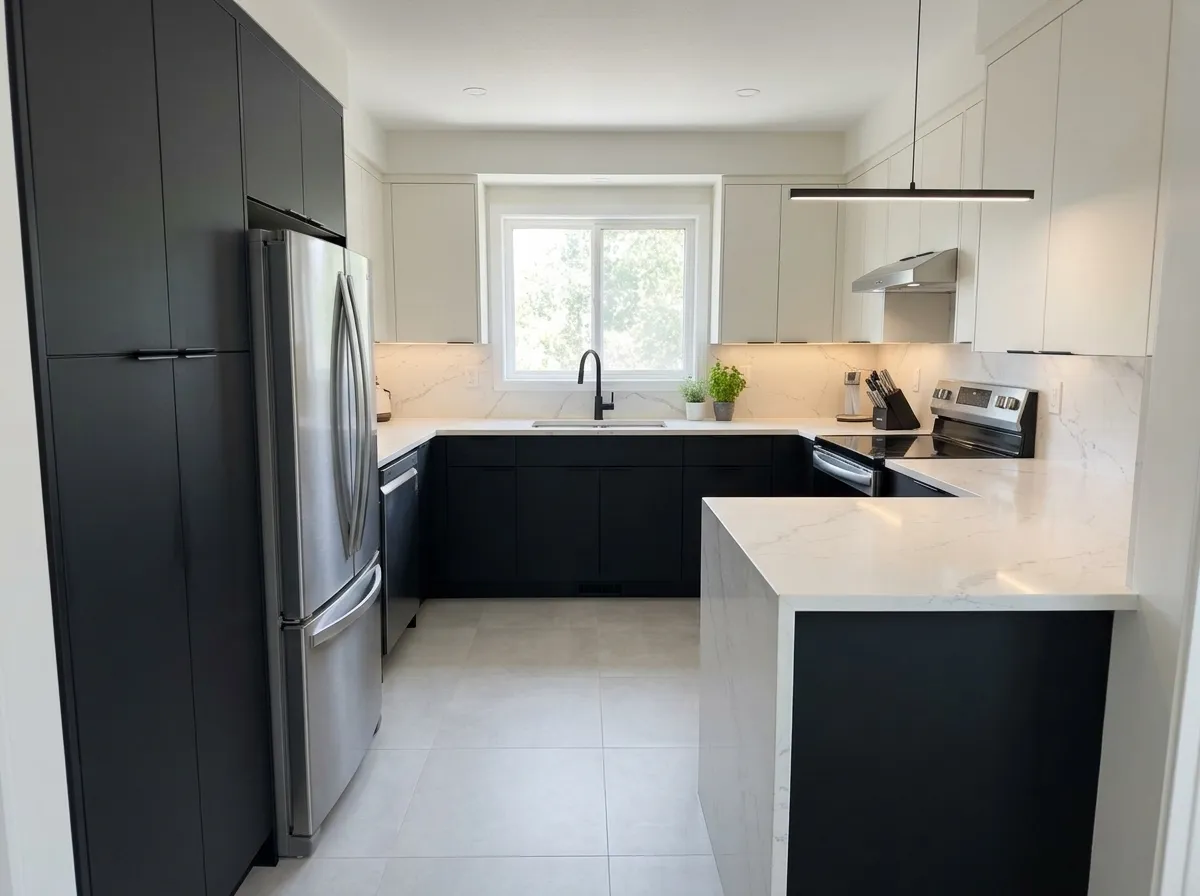
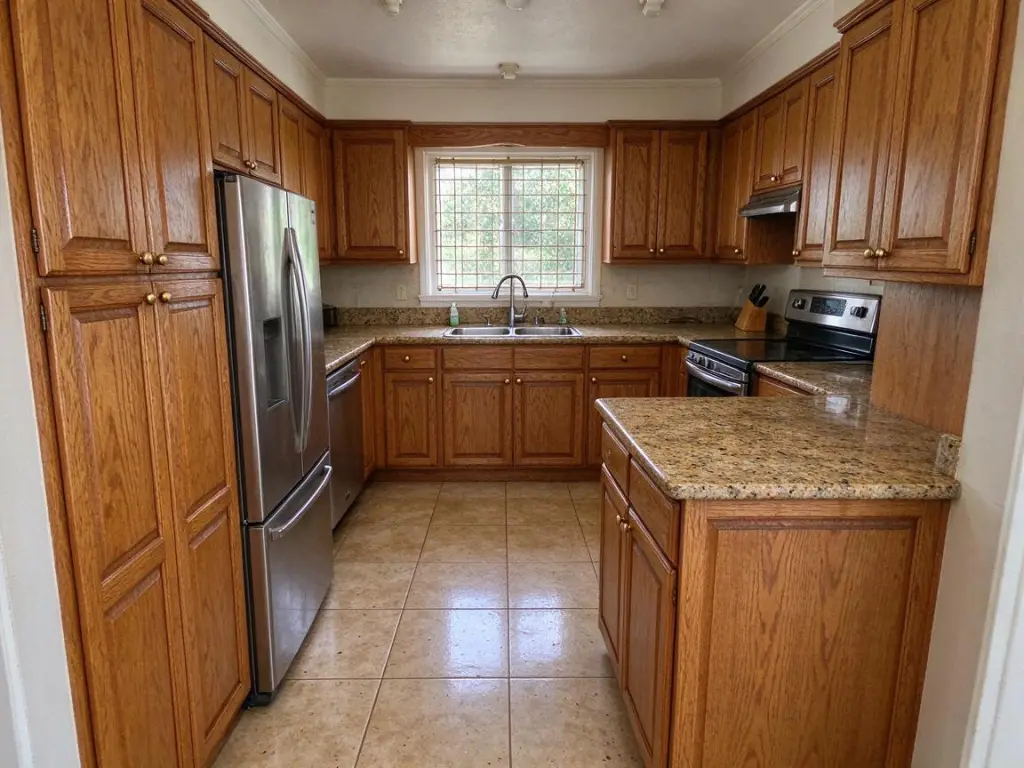
A contemporary kitchen uses high-gloss or matte lacquer slab cabinets, a quartz or porcelain waterfall island, contrast between light and dark finishes, integrated appliances and linear pendants. To preview it on your own kitchen, upload a photo to AI Kitchen Redesign and pick Contemporary; sign in with Google and your first 3 images are free.
What defines the style
- Cabinets
- Slab doors in high-gloss or matte lacquer, often two-tone with wood or dark veneer.
- Countertops
- Quartz or large porcelain slabs, often with a waterfall edge on the island.
- Backsplash
- A full-height slab, back-painted glass or large-format tile.
- Floor
- Large porcelain tile, polished concrete or wide-plank wood.
- Colors
- White, black, gray and dark wood, sometimes with one strong color.
- Lighting
- Linear LED pendants, recessed lights and lit shelves or plinths.
More kitchens in this style
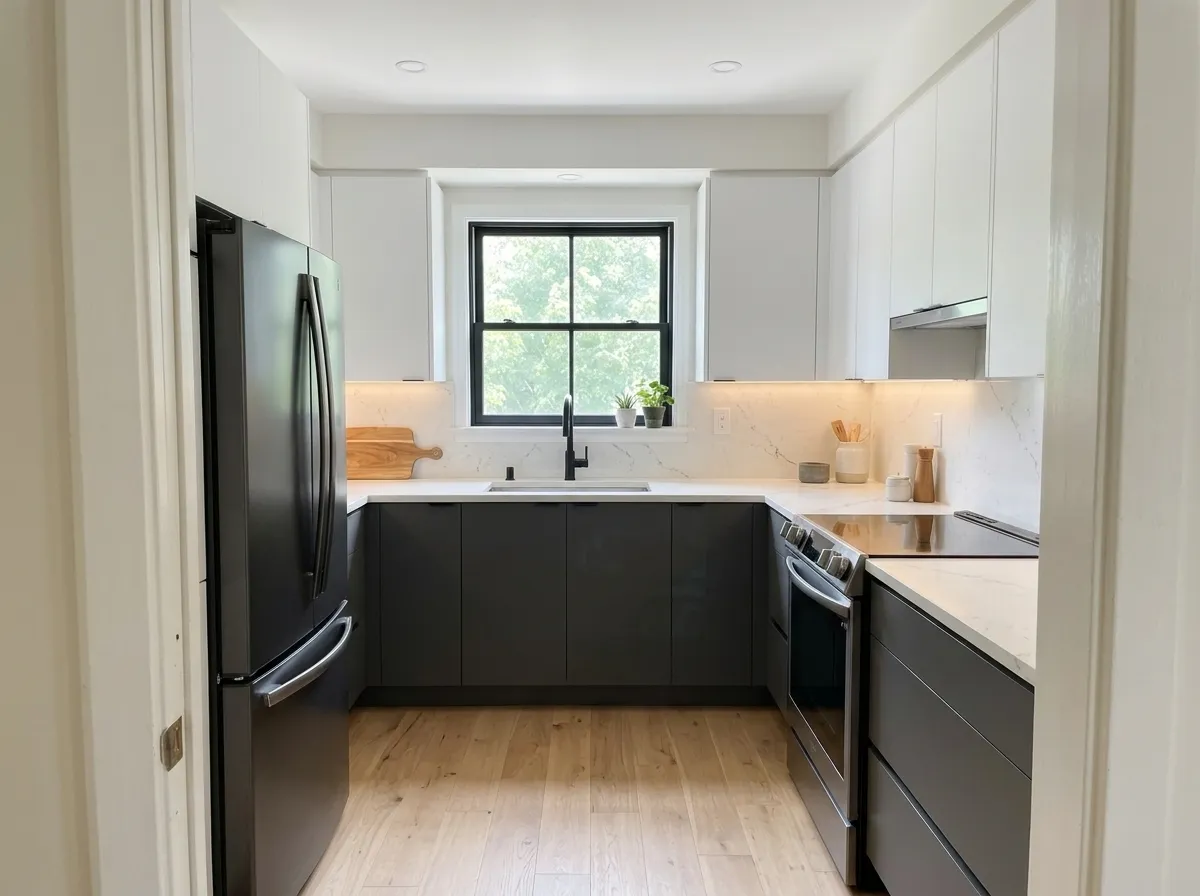
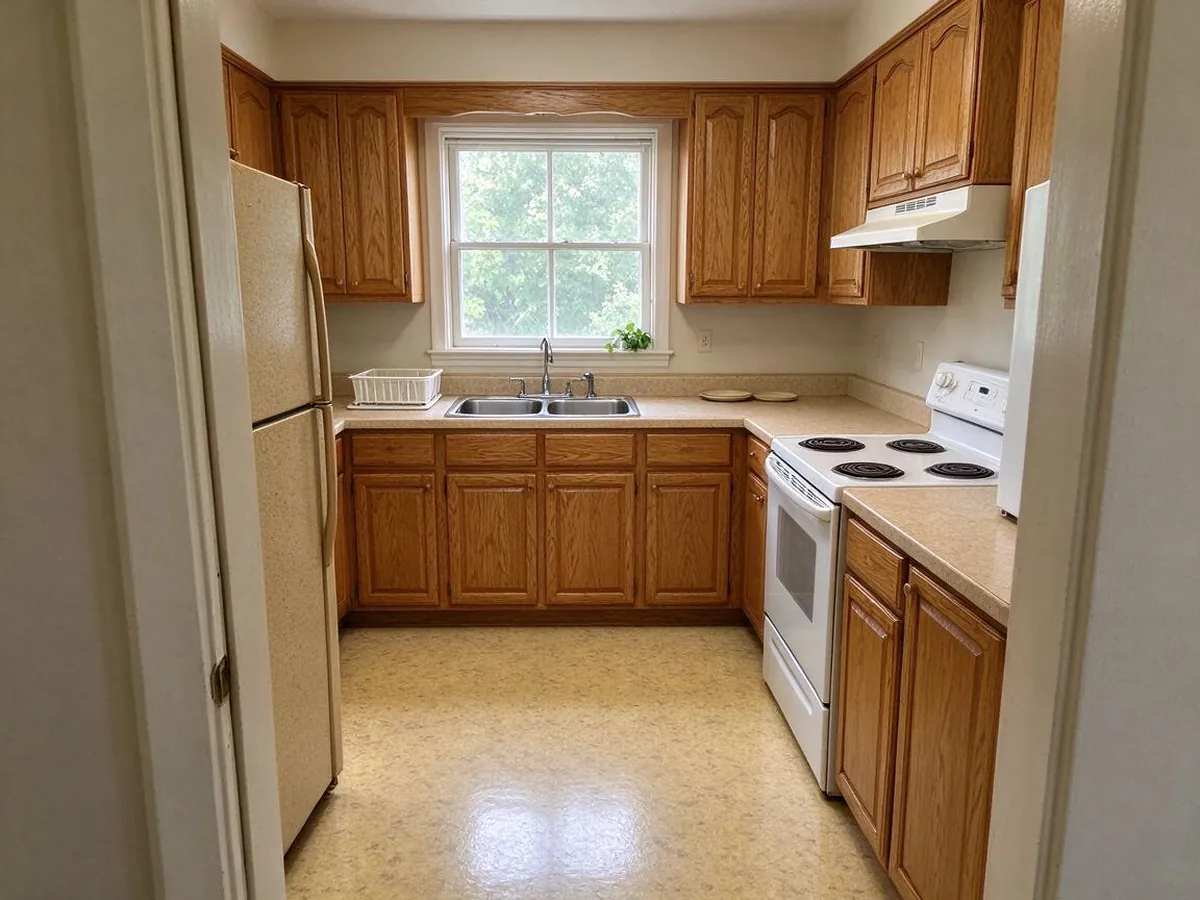 BeforeAfter
Get the look without a full remodel
- Add a waterfall end panel to an existing island counter.
- Replace a busy tile backsplash with one large slab or back-painted glass.
- Swap several small pendants for one linear light over the island.
Contemporary kitchen color schemes
Contemporary kitchens rely on contrast more than most styles. Two strong tones, usually one light and one dark, do most of the work.
White and black: white gloss or matte cabinets, a black island or tall wall, a white quartz counter and black fixtures. Clean and graphic.
Dark wood and pale stone: walnut or smoked oak veneer cabinets with a pale stone-look counter and a matching slab backsplash. Warmer, and easier to live with.
Layered gray: light gray slab cabinets, a charcoal island and a concrete-look counter. Add warm lighting so the room does not feel flat.
One strong color: a run of deep green, terracotta or navy cabinets next to white or wood. Keep the color to one block, such as the island or the tall cabinets.
Contrast is easier to manage in large blocks. Many small changes of color across doors, tile and shelves make the room look busy rather than sleek.
Undertones matter in contemporary kitchens because the surfaces are large. A cool white next to warm walnut can look harsh; a soft white or light greige sits better beside wood.
Contemporary vs modern kitchen: how the materials differ
Modern and contemporary share slab doors and clean lines. Modern refers to a settled look based on 20th-century modernism and stays quiet, with wood and matte surfaces. Contemporary follows what is current and goes further: thicker or waterfall counters, more gloss, bigger slabs, mixed finishes and more striking lights.
A typical contemporary pairing is lacquer slab cabinets with handleless or channel pulls, a quartz or porcelain counter with a waterfall island, a matching slab backsplash, large-format floor tile and linear LED lights.
Two door finishes are common, for example matte white on the walls and wood veneer on the island. Keep it to two; three finishes on the doors starts to look disjointed.
Integrated and panel-ready appliances keep the surfaces continuous. Where an appliance shows, pick one finish, usually black or stainless.
Combinations to avoid: shaker doors, ornate hardware, rustic wood and small patterned tile pull the room away from contemporary. Gloss on doors, counters and floor all at once can feel like a showroom and shows every mark.
Texture keeps large slabs interesting: a fluted island panel, a ribbed glass door or a leathered stone finish adds depth without adding pattern.
Which kitchens suit a contemporary style?
Open-plan kitchens, apartments and newer houses with simple trim suit contemporary well. A long island or one tall wall of cabinets becomes the focal point.
In a small kitchen, use light handleless cabinets and one dark element, such as the counter or a single tall cabinet. Gloss reflects light, which can help a small room feel larger.
In an older house, a contemporary kitchen can work as a deliberate contrast if the rest of the room is kept simple. A matte finish and a wood island help it sit with older floors and windows.
The style suits people who like clear counters and clean surfaces and do not mind wiping down gloss. Matte lacquer and textured laminates show fewer fingerprints.
Renters can borrow the look with a linear pendant if allowed, plain stools, a slab-style cutting board and small appliances put away.
Contemporary also suits people who like to update the kitchen over time: a base of slab doors and plain counters takes new lights, stools and colors easily.
Contemporary kitchen on a budget vs a full remodel
The Light refresh level changes paint, hardware and lights: repaint slab doors in a matte tone, swap the handles for slim pulls, and add a linear pendant and under-cabinet LED.
The Remodel level replaces the doors with lacquer or veneer slabs on the existing boxes, adds a quartz or porcelain counter and a slab backsplash, and changes the floor to large tile or wide wood.
Full redesign suits a contemporary kitchen when you want a waterfall island, a wall of tall cabinets that hides the fridge and oven, or a new layout. Compare it with the Remodel level on the same photo.
Upload a photo of the slab or veneer you like as a material reference, or use change one thing mode to test only the countertop or only a new cabinet color.
If you are torn between modern and contemporary, generate both on the same photo. The difference in contrast and gloss is easiest to judge in your own light.
Under-cabinet and toe-kick lighting are some of the cheapest contemporary details. They make slab surfaces look sharper and are easy to add at any level.